

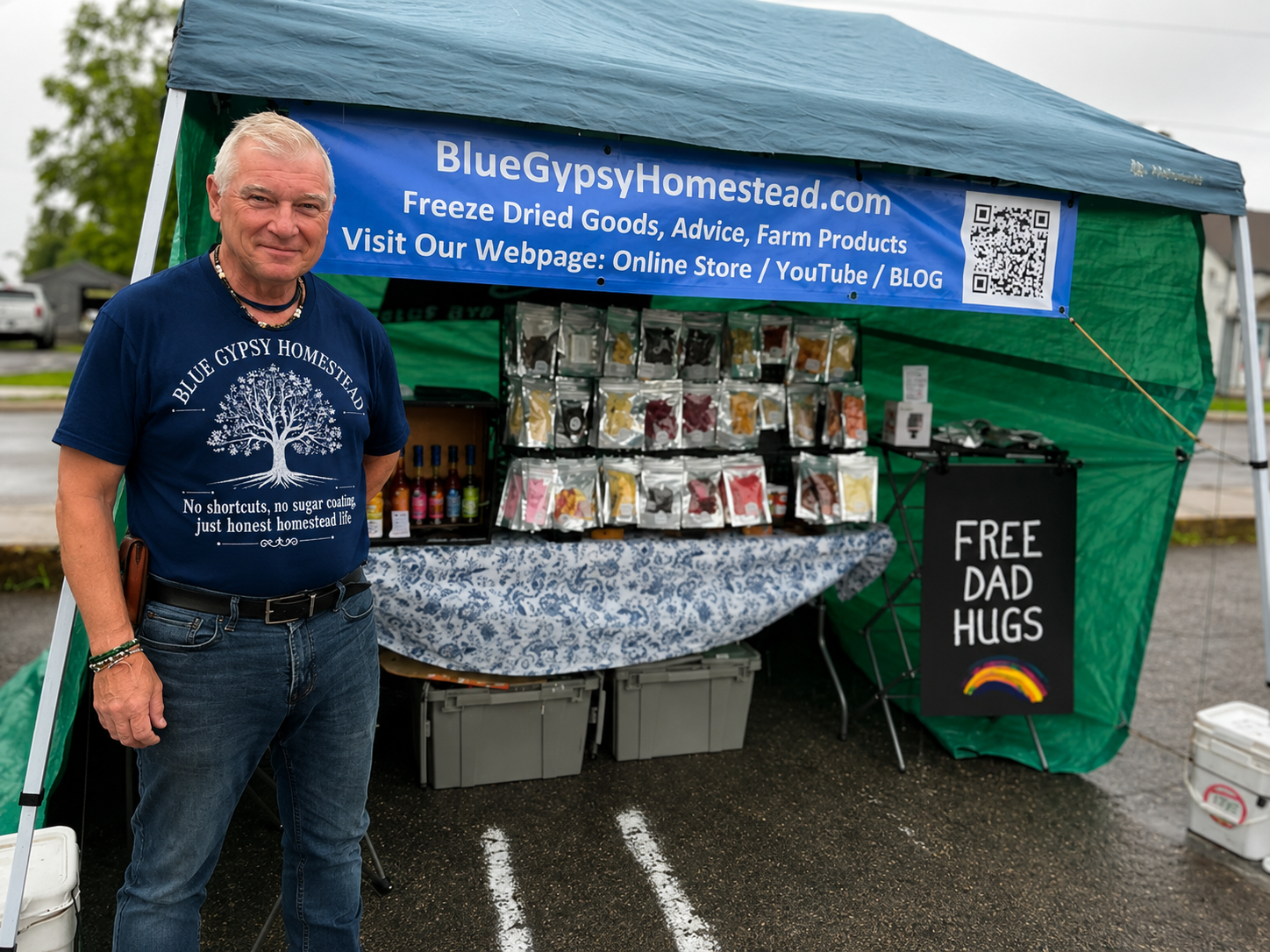
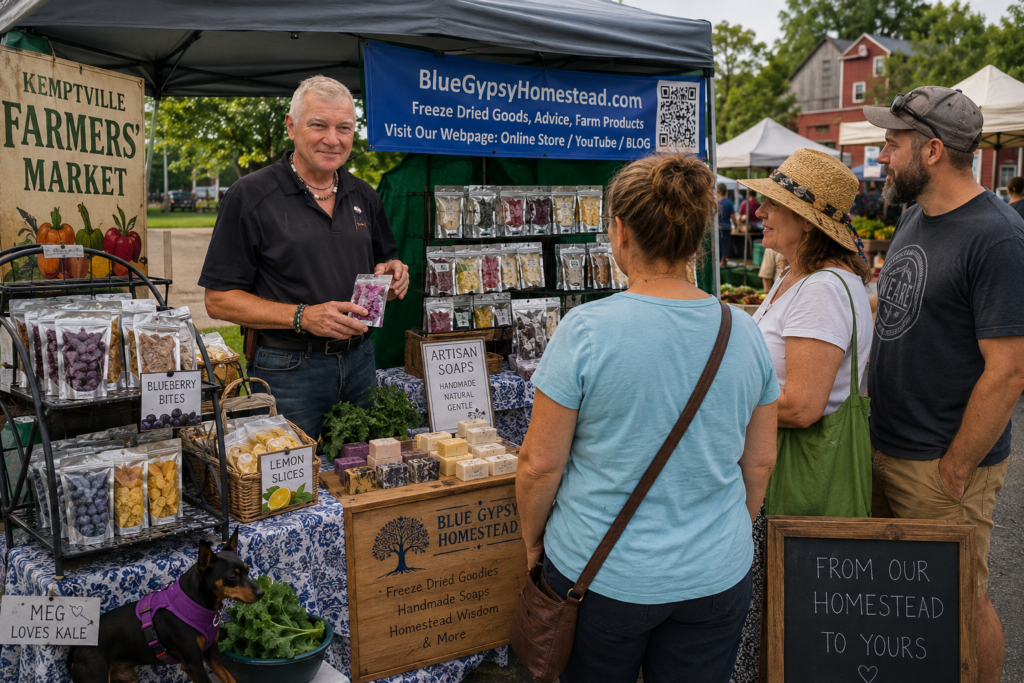
 Every Sunday from 11:00 a.m. to 3:00 p.m., you’ll find me at the Kemptville Farmers’ Market, talking to people about freeze-dried foods, the homestead, and whatever project has managed to occupy my attention that week.
By far, the question I hear most often is:
“What’s the difference between freeze drying and dehydrating?”
It’s a great question.
Most people have heard of dehydrated food. Many have a dehydrator sitting in a cupboard somewhere, or they’ve made homemade beef jerky or dried apple slices. So it’s perfectly understandable that people assume freeze-drying is simply another name for dehydration.
The truth is…
They really aren’t the same thing.
Both methods remove water from food, which helps preserve it, but that’s where most of the similarities end. The way they remove the water—and the quality of the finished product—are dramatically different.
Dehydration: Using Heat to Remove Moisture
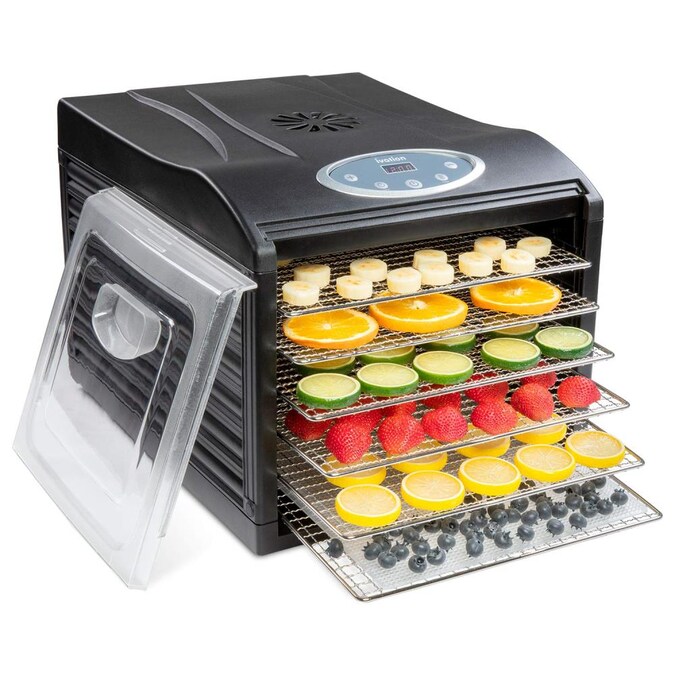
Dehydration is the older and far more familiar method.
Food is exposed to warm, circulating air, typically between 50°C and 70°C (120°F to 160°F), for several hours or even days. As the food warms, the water inside slowly evaporates.
The process is simple, inexpensive, and works well for many foods, including fruit leather and jerky/pemmican.
The downside is that heat changes food.
As moisture leaves, the food shrinks. Cell walls collapse. Texture changes. Colours often darken, and some heat-sensitive vitamins—particularly vitamin C and several B vitamins—are reduced during the drying process. While dehydrated foods still retain much of their nutritional value, the application of heat inevitably alters the product to some degree.
Think about raisins.
They’re still grapes…
…but nobody would mistake a raisin for a fresh grape.
The same applies to dried apples, bananas, or strawberries. They become chewy, denser, and their flavours become more concentrated.
When properly stored in airtight containers, dehydrated foods typically remain at their best for one to five years, depending on the food and storage conditions.
For many applications, dehydration is an excellent solution.
Freeze Drying: Removing Water Without Heat
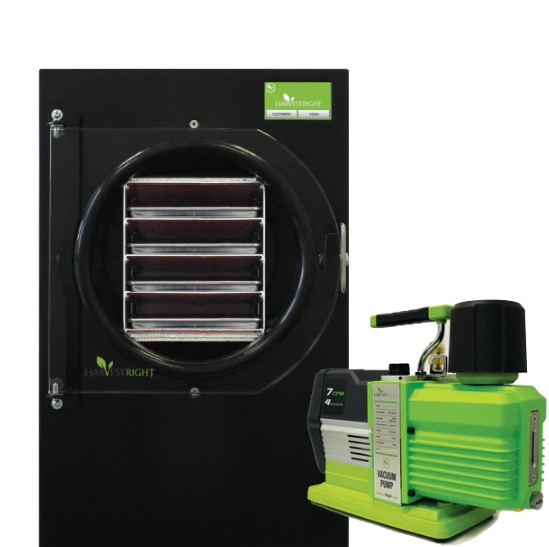 Freeze drying takes an entirely different approach.
Instead of heating the food, it is first frozen solid.
Once frozen, the food is placed inside a vacuum chamber where the air pressure is dramatically reduced. Under these conditions, the ice doesn’t melt into water first.
Instead, it undergoes a fascinating scientific process called sublimation, where the ice changes directly from a solid into water vapour.
In other words…
The water leaves the food without ever becoming liquid.
Because the food never experiences high temperatures, its cellular structure remains largely intact. That’s why freeze-dried strawberries still look like strawberries, sliced mushrooms still resemble fresh mushrooms, and peas don’t shrivel into tiny green pebbles.
The texture is completely different as well.
Instead of being chewy like dehydrated fruit, freeze-dried foods are light, crisp, and often dissolve in your mouth. If you’ve ever tried freeze-dried strawberries or astronaut ice cream, you already know exactly what I mean.
Another advantage is weight.
Since nearly all of the water has been removed, freeze-dried foods become incredibly lightweight, making them ideal for hiking, camping, canoe trips, emergency preparedness, or simply reducing storage space.
What About Nutrition?
This is another question I hear regularly.
Both dehydration and freeze drying preserve nutrients far better than leaving food to spoil.
However, because freeze drying uses very little heat, it generally retains more of the original flavour, colour, aroma, and nutritional value than conventional dehydration.
No preservation method leaves food exactly the same as fresh, but freeze drying comes remarkably close.
Shelf Life
One of the biggest advantages of freeze drying is shelf life.
When packaged properly using moisture-resistant packaging and oxygen absorbers, freeze-dried foods can remain shelf stable for 20 to 25 years under ideal storage conditions.
Please note: Products sold online and at the farmers’ market are not intended for long-term storage and should be consumed within a year.
That doesn’t mean every package should sit on a shelf for a quarter of a century.
It simply means the preservation method is capable of achieving that kind of longevity when done correctly.
For everyday use, it also means less food waste.
You can preserve seasonal fruits and vegetables when they’re at their peak instead of watching them spoil a week later.
So… Which Is Better?
Honestly?
That depends entirely on what you’re trying to accomplish.
If you’re making beef jerky, fruit leather, or dried herbs, dehydration is a fantastic choice.
If you’re looking for the closest thing to fresh food after preservation—something that’s lightweight, crisp, rehydrates beautifully, and can last for decades—freeze drying is difficult to beat.
Neither method is “wrong.”
They’re simply different tools designed for different jobs.
Want to Learn More?
One of the clearest explanations of the freeze-drying process I’ve found is this excellent YouTube video:
👉 What is Freeze Drying?
Watch on YouTube
If you stop by to watch it, I’d appreciate it if you mentioned in the comments that you found it through Blue Gypsy Homestead.
I don’t receive anything for recommending it—I simply think they did an outstanding job explaining the science in a way that’s easy to understand.
And of course, if you’re in the Kemptville area on a Sunday, stop by the Kemptville Farmers’ Market between 11:00 a.m. and 3:00 p.m. I’d be happy to answer your questions and, even better, let you taste the difference for yourself.
Sometimes the best explanation is one you can eat.
Come Follow Along!
I’ve launched a YouTube channel for the homestead.
If you could, please stop in, view the video, select “Like,” subscribe, and share the link. These things will really help the channel get off the ground.
Now on TikTok!
Starting this week, I have launched a page on TikTok.
Please drop by if you get a chance.
More content is forthcoming.
👉 TikTok
Ready to Start Your Own Journey?
If you’re thinking about starting your own homestead, check this out:
👉 Learn More
Shop For Blue Gypsy Homestead Products Online!
If you’d like to see more of what we offer for sale, please stop in at our
👉 Online Store
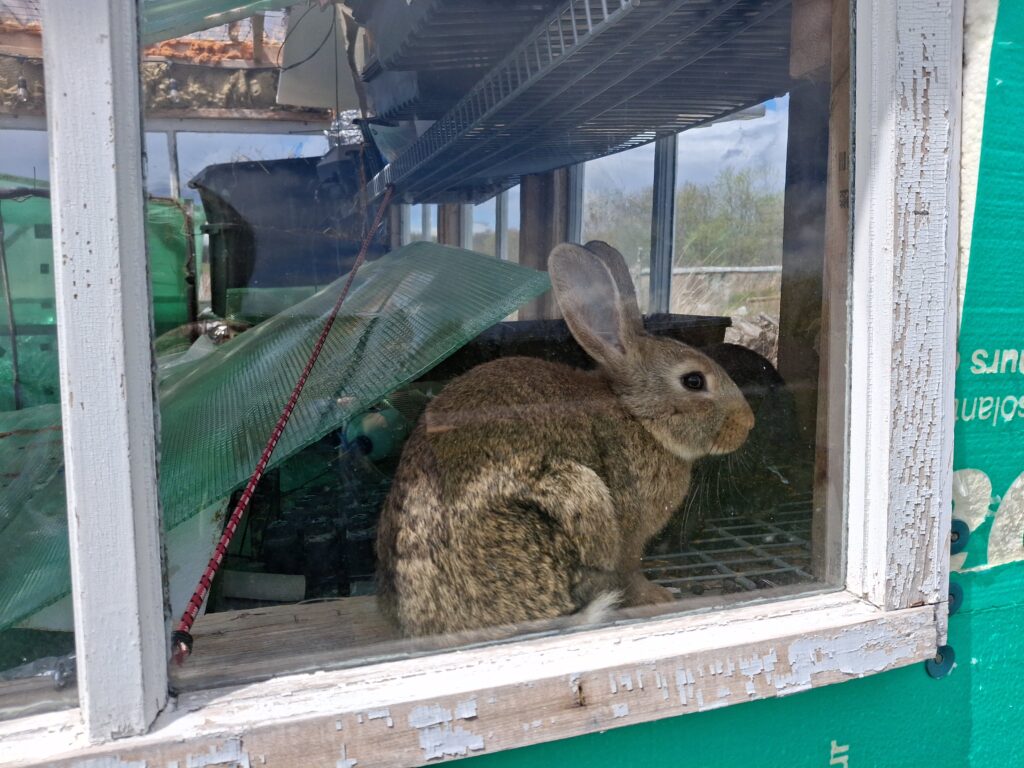
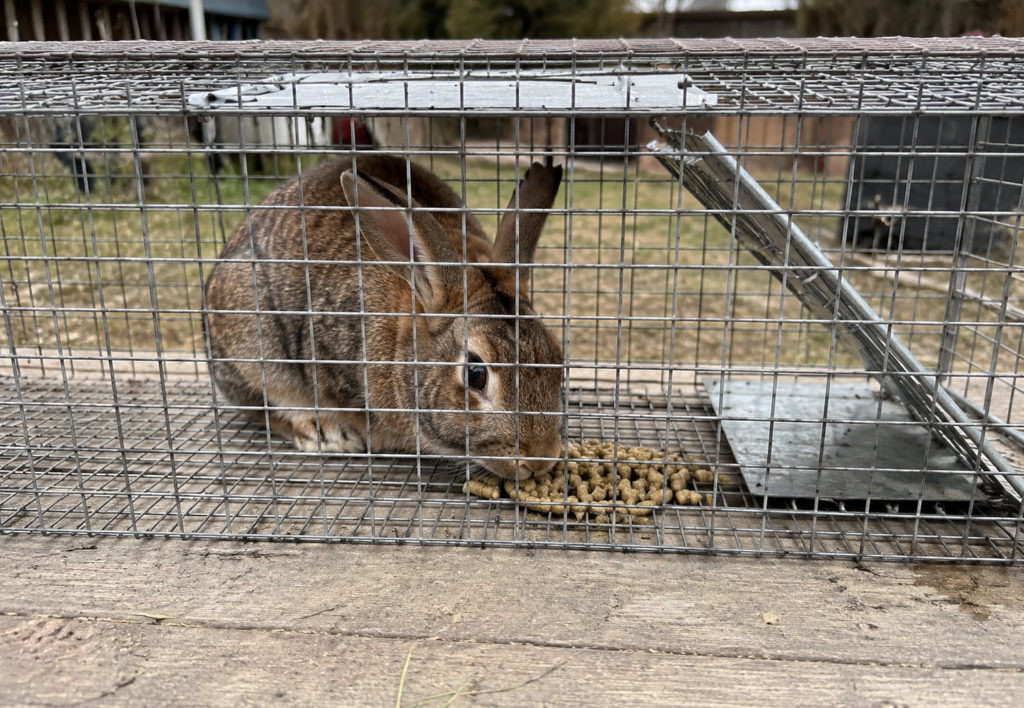 To my immense relief, they did. One by one, the escape artists found their way back into custody, no doubt questioning why the forbidden treats had suddenly become so easy to acquire. As of now, all but one rabbit has been recovered. There’s still one holdout somewhere on the property, and while I can’t help but admire its determination and apparent commitment to independence, I’m holding onto the hope that a little patience—and perhaps the promise of another favourite snack—will eventually bring this final wanderer home. After all, if homesteading teaches anything, it’s that ingenuity often matters just as much as hard work, and sometimes the gentlest solutions turn out to be the most effective.