

The Hardest Part of Raising Meat Rabbits
A candid look at the emotional reality of raising meat rabbits on a Canadian homestead. Learn why humane animal husbandry, respect for livestock, and personal responsibility matter when producing your own food.
Trigger Warning
This blog discusses the harvesting of live rabbits.
There will be no images nor video accompanying this post. There are already plenty of educational videos on this topic, and I don’t plan to create one.
Part of that decision stems from the belief that the harvesting process deserves respect. While education has value, I do not believe that the most difficult part of animal husbandry should be turned into entertainment or spectacle. Unfortunately, some people find the dispatching of animals stimulating or entertaining. I find that troubling. More importantly, I believe that respect for the animal should remain the priority and that humane animal husbandry requires us to approach this process with seriousness and dignity.
A Choice I Made as a Meat-Eater
As someone who eats meat, I made the decision some time ago to take responsibility for at least some of my own food production.
For me, that means raising and processing some of the meat that I consume. It allows me to be honest with myself about where food comes from, to face my own discomfort, and to ensure that the animals under my care are treated with as much respect as possible throughout their lives.
People need to understand that harvesting an animal is, without question, the most difficult part of raising meat rabbits.
I have watched these rabbits grow from tiny kits into full-grown animals. I have fed them, watered them, protected them, and done my best to provide a healthy environment where they could thrive. Every decision I make is intended to give them the best life possible.
When the time comes, I work very hard to ensure that the dispatch process is carried out quickly, carefully, and as humanely as possible. The goal is always to minimize stress, prevent suffering, and avoid mistakes that could cause unnecessary trauma.
No Pleasure in the Process
I take no pleasure in this step.
If I am being completely honest, I often put it off longer than I should because it weighs heavily on me.
The reality is that I care about the animals under my care.
That may seem contradictory to some people, but it is the truth.
The emotional weight never completely goes away, and perhaps it shouldn’t.
I believe that taking a life should never become casual or routine. It should always carry a measure of responsibility and reflection.
Why Do It?
Some people will naturally ask:
“If it’s that difficult, why do it at all?”
The answer is simple.
I know exactly what these rabbits ate.
I know where they lived.
I know how much space they had.
I know how they were treated.
My rabbits have access to nearly 440 square feet of space in the rabbit palace and are raised in a way that prioritizes their welfare.
This is not a commercial operation.
I am not trying to maximize production or efficiency.
Because I control every aspect of the process, I can ensure that the animals receive the best care I am capable of providing.
Lessons Learned at CFIA
Many years ago, while working for the Canadian Food Inspection Agency (CFIA), I visited slaughterhouses and commercial farming operations.
What I saw left a lasting impression on me.
To be clear, there are many dedicated and professional people working in agriculture, and food safety standards in Canada are among the best in the world. However, some of the methods and realities of large-scale food production caused me to think deeply about my relationship with food.
Those experiences played a significant role in my decision to raise and process some of my own meat whenever possible.
It wasn’t about criticizing others.
It was about taking responsibility for my own choices.
Rabbits Versus Chickens
Long-time followers of Blue Gypsy Homestead may remember that I raised meat chickens for several years.
Over time, I decided to transition toward rabbits.
For my particular situation, rabbits have proven easier to manage, require less space and feed, and produce meat that is exceptionally lean and nutritious.
That doesn’t mean rabbits are the right choice for everyone.
It simply means they fit my homestead better than chickens did.
Breeders Have Names
One question I receive fairly often is whether I name my rabbits.
The answer is:
The breeders have names. The grow-outs do not.
The breeder rabbits are long-term members of the homestead and remain here for years. The grow-outs are raised specifically as food animals.
Some people may understand that distinction.
Others may not.
Either way, it is a system that helps me maintain the balance between animal husbandry and food production.
Nothing Goes to Waste
One of my goals moving forward is to tan and sell rabbit hides through the Blue Gypsy Homestead website and, if time permits, at local farmers’ markets.
If there is enough interest, I will make additional information available through the online store in the coming months.
For me, using as much of the animal as possible is another way of showing respect for the sacrifice that has been made.
Respecting Different Perspectives
I understand that this subject can generate strong emotions.
Some readers may strongly disagree with my decision to raise and harvest rabbits for meat.
I respect that.
I am not asking anyone to change their beliefs.
I only ask that others respect my decision in return.
Reasonable people can disagree while still treating one another with courtesy and respect.
Gratitude and Closure
As I finish writing this, I know what I need to do next.
I need to gather my courage and head outside.
When the work is done, I will sit quietly.
I will light a few candles.
I will pour a glass of rum.
And I will express gratitude for the rabbits—and for every animal that ultimately becomes food on my table.
Some people may view that as symbolic.
Others may view it as spiritual.
For me, it is simply a moment of reflection and closure.
It reminds me that food comes with responsibility, that life has value, and that gratitude is never misplaced.
No matter how many times I go through this process, I hope it never becomes easy.
Because if it ever does, I think I will have lost something important.
📺 Follow the Blue Gypsy Homestead Journey
Whether it’s raising rabbits, growing food, preserving harvests, building infrastructure, or sharing the realities of homestead life, you’re invited to follow along.

▶️ YouTube
Watch videos about homesteading, gardening, food preservation, rabbit husbandry, DIY projects, and life on a working homestead.
Blue Gypsy Homestead on YouTube
🎵 TikTok
Follow for short videos, quick updates, behind-the-scenes projects, and everyday homestead life.
Blue Gypsy Homestead on TikTok
🌱 Learn More
Read more articles about homesteading, food production, self-sufficiency, gardening, livestock, and rural living.
Blue Gypsy Homestead – Learn More
🛒 Online Store
Browse freeze-dried foods, gourmet seasonings, homestead products, and other items available from Blue Gypsy Homestead.
Blue Gypsy Homestead Online Store
About Blue Gypsy Homestead
Blue Gypsy Homestead is a 62-acre farm located approximately 35 minutes south of Ottawa, Ontario, Canada. The homestead is being developed into a productive sustenance and market farm focused on growing food, raising livestock, preserving harvests, building practical infrastructure, and increasing self-sufficiency.
Through articles, videos, and real-world experiences, Blue Gypsy Homestead shares the successes, failures, lessons learned, and realities of modern homestead life. Topics include gardening, livestock, food preservation, DIY projects, freeze-drying, canning, rabbit husbandry, and sustainable living.
The goal is simple: share honest experiences, practical knowledge, and the realities of producing food while treating animals, land, and resources with respect.

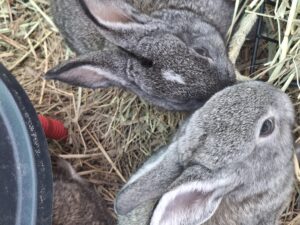
 When you raise animals, food is no longer just something from a store.
 The goal is simple: