The Things About Homesteading Nobody Puts on the Internet – BLOG – 2026-Aug-29

The Things About Homesteading Nobody Puts on the Internet

In 2019, two major events changed the course of my life. I closed the winery, and my wife and I decided to go our separate ways. We sold the house, and I made the decision to renovate the old winery building into my new home. At the time, I had no idea just how much that decision would change my life. What started as a practical solution to a major transition eventually became the beginning of an entirely new journey—one that would lead me to homesteading.

When I started looking into homesteading, I did what most people probably do.

    • I went online.
    • I watched videos. I read articles. I looked at photographs of beautiful gardens, neatly stacked firewood, happy chickens wandering through green grass, perfectly organized pantries and baskets overflowing with vegetables.

It all looked wonderful.

And, to be fair, some of it really is wonderful.

What I didn’t see nearly as often were the less glamorous parts.

      • The broken equipment.
      • The muddy boots.
      • The endless cleaning.
      • The projects that take three times longer than expected.
      • The money that disappears into things I never knew I needed.
      • The vegetables that refuse to grow.
      • The animals that have their own ideas about how things should work.

And the fact that sometimes I spend an entire day working outside and, at the end of it, I’m not entirely sure what I accomplished.

That’s the part of homesteading that doesn’t always make it onto the internet.

So, after spending some time doing this myself, I thought I’d talk about it.

Not to discourage anyone from homesteading.

Quite the opposite.

I think understanding the reality makes the good parts even better.


Homesteading Is a Lot of Work

This probably shouldn’t come as a surprise, but I underestimated it anyway.

      • There is always something to do.
      • If I’m not working in the garden, something needs repairing.
      • If nothing needs repairing, there is probably something that needs cleaning.
      • If everything is clean, there are animals to feed.
      • If the animals are fed, there is probably a fence that needs attention.
      • And if everything is somehow working perfectly, I can always find another project.

That’s one of the realities of having land.

Things don’t stay finished.

      • A garden doesn’t become “done.”
      • A fence doesn’t stay perfect forever.
      • Buildings need maintenance.
      • Equipment needs attention.
      • Animals need care.

The work doesn’t end simply because I finished the project I started that morning.

I’ve learned to accept that.

The homestead is less like a list of projects and more like a living system that requires ongoing attention.


Things Break

This is another one that doesn’t photograph particularly well.

      • A piece of equipment breaks.
      • A hinge fails.
      • A board rots.
      • A water line leaks.
      • A tool stops working.
      • A gate doesn’t close properly.
      • Something that worked perfectly yesterday suddenly doesn’t.
      • And, of course, it usually happens when I need it most.

I’ve learned that maintenance is part of homesteading.

It’s not something I do only when something breaks.

I’m getting better at looking at things and asking:

“What is likely to fail next?”

This isn’t negativity, it’s just good planning.  Sometimes spending a little time fixing a small problem today prevents a much bigger problem later.

Not always.

But often enough that I’ve learned to pay attention.


The Weather Is in Charge

I can make plans.

The weather does not care.

I can decide that today is the perfect day to plant something, build something, paint something or work on a particular project.

      • Then it rains.
      • Or it gets too hot.
      • Or the wind picks up.
      • Or the temperature drops.
      • Or we get an unexpected stretch of weather that changes everything.

Gardening has made this especially obvious.

I can prepare the soil, plant carefully and do everything I think I’m supposed to do.

Then Mother Nature gets involved.

Sometimes she helps.

Sometimes she doesn’t.

I’ve learned that one of the most useful homesteading skills is being able to change plans without becoming frustrated by the fact that the original plan didn’t survive contact with reality.


A Garden Does Not Follow a Schedule

I used to think of gardening in fairly simple terms.

      • Plant.
      • Water.
      • Grow.
      • Harvest.

The reality is considerably more complicated.

      • Some things grow beautifully.
      • Some things barely grow at all.
      • Some plants produce much earlier than expected.
      • Others seem to be waiting for a completely different season.
      • Sometimes everything ripens at once.

That’s when the fun really starts.

Suddenly I have more vegetables than I can eat, and I need to decide what I’m going to do with them.

That’s why I’ve become increasingly interested in food preservation.

Canning, freezing, dehydrating and freeze-drying aren’t just hobbies for me.

They’re ways of dealing with the reality of having a productive garden.

The goal isn’t simply to grow food.

It’s to make use of the food I grow.


More Food Can Actually Create More Work

This sounds like a strange problem to have.

It isn’t.

Imagine spending months trying to get a garden producing well.

Then it works.

Really well.

Suddenly I have tomatoes everywhere.

Or peppers.

Or herbs.

Or berries.

That’s a good problem to have, but it’s still a problem that needs solving.

Fresh food doesn’t wait for my schedule.

If I don’t preserve it, use it or give it away, eventually it becomes waste.

That’s one reason I’ve been experimenting with freeze-drying.

Freeze-drying gives me another way to preserve some of the food I grow and turn seasonal abundance into something I can store and use later.

It also led me to another opportunity: custom freeze-drying services for people who have their own garden surplus but don’t own a freeze dryer.

Sometimes one homestead project leads naturally to another.


Animals Don’t Follow My Schedule Either

I’ve also learned that animals are very good at reminding me who is actually in charge.

I can have a plan for the rabbits.

The rabbits may have a different plan.

I can build an enclosure that I think is secure.

The rabbits may immediately begin investigating how to defeat it.

I’ve learned that raising animals means paying attention.

      • They need food.
      • They need water.
      • They need clean housing.
      • They need protection.
      • They need observation.
      • And they occasionally need me to solve a problem that wasn’t on my schedule for the day.

There was also the memorable occasion when a rabbit enclosure door was left unsecured and I suddenly had rabbits exploring the property.

That was not part of the plan.

It was, however, a very effective lesson in making sure doors are actually closed.


Homesteading Costs Money

This is one of the biggest misconceptions I had to reconsider.

Homesteading can save money in some areas.

It can also cost quite a bit of money.

      • Seeds cost money.
      • Feed costs money.
      • Fencing costs money.
      • Lumber costs money.
      • Tools cost money.
      • Animal housing costs money.
      • Equipment costs money.

And then there are all the little things.

A small purchase here.

Another one there.

Before long, the “inexpensive” project has accumulated quite a bill.

I’ve learned that I need to look at homesteading as an investment rather than assuming everything I produce will automatically be cheaper than buying it.

      • Sometimes I save money.
      • Sometimes I don’t.
      • Sometimes I gain something more valuable than the difference in price.

Knowing where my food came from has value.

Learning a new skill has value.

Being able to preserve my own food has value.

Becoming more capable has value.

Those things don’t always show up on a spreadsheet.


Your Time Has Value Too

This is another one I didn’t fully appreciate at the beginning.

If I spend four hours growing, harvesting and processing something that costs very little at the grocery store, I need to be honest about what I’m actually doing.

I’m not necessarily saving money.

I’m choosing to spend my time differently.

And that’s perfectly legitimate.

The important thing is recognizing the difference.

I enjoy many of the things I do on the homestead.

That’s part of the reason I’m doing them.

But enjoying something doesn’t mean my time has no value.

I’ve become much more conscious of that as I’ve started turning some homestead activities into products for my store.

If I’m making seasoning salts, freeze-dried foods or other products, I need to understand not just the ingredient cost but also the time and effort involved.

That’s where homesteading and business start meeting each other.


You Will Buy Things You Don’t Need

I have learned this lesson more than once.

I’ll see a tool or piece of equipment and think:

“That would make things easier.”

Sometimes it does.

Sometimes it turns out to be something I rarely use.

I’ve become much more cautious about buying equipment simply because it looks useful.

Now I ask myself:

What problem does this actually solve?

If I can’t answer that question clearly, I probably don’t need it yet.

This has become particularly important because I’m trying to build Blue Gypsy Homestead without spending money simply for the sake of expanding.

Sometimes the best tool is the one I already own.


Simple Projects Rarely Stay Simple

I’ve learned not to use the phrase “This should be easy.”

It seems to tempt fate.

I’ll start a project thinking it should take an afternoon.

Then I discover a problem.

Solving that problem creates another problem.

That requires a different solution.

And suddenly I’m looking at a project that has evolved into something completely different from what I originally imagined.

This happens frequently enough that I’ve learned to build flexibility into my plans.

I also try to remind myself that not every project needs to be completed in one day.

That’s easier said than done.

But I’m getting better at it.


Homesteading Requires Learning Constantly

There is a lot I don’t know.

That’s not a complaint; it’s actually one of the things I enjoy most.

      • Every season gives me something new to learn.
      • Every animal teaches me something.
      • Every crop teaches me something.
      • Every failed project teaches me something.

Sometimes the lesson is:

“That was not a good idea.”

That’s still useful information.

      • I’ve discovered that I don’t need to know everything before I start.
      • I need to be willing to learn as I go.
      • Research is valuable.
      • Experience is even more valuable.
      • And the combination of the two is where I seem to make the most progress.

You Have to Be Comfortable With Failure

This is probably one of the most important lessons I’ve learned.

      • Not everything works.
      • Some plants fail.
      • Some projects fail.
      • Some ideas aren’t practical.
      • Some products don’t sell.
      • Some equipment purchases aren’t as useful as I expected.

That’s part of the process.

I used to see failure as evidence that I had done something wrong.

Now I try to see it as information.

If something fails, I want to understand why.

      • Was the timing wrong?
      • Was the design wrong?
      • Did I underestimate the cost?
      • Did I misunderstand what customers wanted?
      • Did I simply get unlucky?

Once I know why something didn’t work, I can make a better decision the next time.

That’s progress.


The Homestead Is Never Going to Look Like the Pictures

This might be my favourite one.

The internet is very good at showing the best five minutes.

      • A beautiful sunrise.
      • A basket of vegetables.
      • A perfectly organized pantry.
      • A rabbit sitting peacefully in the sunshine.
      • A freshly built garden bed.

What you don’t always see is what happened immediately before the photograph.

      • The weeds.
      • The mud.
      • The broken fence.
      • The tools scattered everywhere.
      • The failed crop.
      • The animal enclosure that needs cleaning.
      • The project that is only halfway finished.

That’s my reality.

And I’ve become comfortable with it.

My homestead isn’t a magazine spread.

It’s a working property.

It’s supposed to show evidence that something is happening.


Sometimes I Don’t Accomplish as Much as I Planned

This is another reality that isn’t particularly photogenic.

There are days when I have a long list of things I want to accomplish.

Then something unexpected happens.

      • Maybe a repair takes longer than expected.
      • Maybe the weather changes.
      • Maybe an animal needs attention.
      • Maybe I discover a problem I didn’t know existed.

At the end of the day, I may have completed only one thing on my list.

It can be frustrating.

But I’ve learned that one important thing accomplished is still progress.

Homesteading isn’t a race.

The property isn’t going anywhere.

There will be another day.


You Don’t Need to Do Everything Yourself

This is something I think gets misunderstood.

Self-sufficiency doesn’t have to mean doing absolutely everything yourself.

      • I can grow food and still buy things.
      • I can raise animals and still purchase feed.
      • I can preserve food and still go to the grocery store.
      • I can build things and still buy equipment.
      • I can learn skills without pretending I have every skill.

For me, homesteading is about becoming more capable and less dependent, not about eliminating every outside resource from my life.

There is a difference.

And I think it’s a healthier way to approach the idea.


Homesteading Is Not Always Productive

Sometimes I spend time outside and simply enjoy being there.

That’s not necessarily wasted time.

There is something satisfying about walking through the garden, checking the animals, looking at what’s growing and seeing the property change with the seasons.

      • Not everything has to become a product.
      • Not every activity has to generate income.
      • Not every hour has to produce something measurable.

Sometimes the benefit is simply knowing that I’m building something that matters to me.


The Good Parts Are Better Than the Internet Makes Them Look

Here’s the funny thing.

After talking about all of the things nobody puts on the internet, I don’t want to give the impression that homesteading is miserable.

It isn’t.

There are moments that are genuinely wonderful.

      • Harvesting something I grew myself.
      • Eating food from my own garden.
      • Watching animals grow.
      • Opening a jar of something I preserved months earlier.
      • Taking an ingredient from the garden and turning it into a product.
      • Solving a problem I couldn’t solve before.
      • Standing outside early in the morning when everything is quiet.

Those moments are real too.

And they’re probably the reason I keep doing all the other work.


What Homesteading Has Really Taught Me

The biggest surprise for me is that homesteading isn’t really about creating a perfect life.

It’s about creating a more intentional one.

      • I’m learning to pay attention.
      • I’m learning to use what I have.
      • I’m learning to preserve abundance.
      • I’m learning to repair instead of replace when it makes sense.
      • I’m learning to accept that plans will change.
      • I’m learning that mistakes are part of the process.
      • And I’m learning that progress doesn’t always look impressive from the outside.

Sometimes progress is a new garden bed.

Sometimes it’s a repaired fence.

Sometimes it’s a successful litter of rabbits.

Sometimes it’s a jar of seasoning salt.

Sometimes it’s simply figuring out a better way to do something I’ve already done ten times.

That’s the part of homesteading I wish I had seen more often when I started.

It’s not perfect.

It’s not always efficient.

It isn’t always inexpensive.

It isn’t always easy.

But it is real.

And for me, that’s what makes it worthwhile.


🌱 Follow the Blue Gypsy Homestead Journey

I share the good, the bad, the unfinished projects and the lessons I’m learning as I continue building Blue Gypsy Homestead into a productive one-man homestead and business.

▶️ YouTube

Follow my homesteading projects, gardening, rabbit raising, food preservation, freeze-drying, product development and everyday life on the homestead.

Blue Gypsy Homestead on YouTube

🎵 TikTok

Follow me for shorter videos, quick updates, behind-the-scenes projects and the occasional homestead surprise.

Blue Gypsy Homestead on TikTok

🌱 Learn More

Learn more about my homestead, projects, services, products and the journey I’m documenting along the way.

Blue Gypsy Homestead – Learn More

🛒 Online Store

Browse the products I’m making and selling from Blue Gypsy Homestead, including freeze-dried foods, seasoning salts, smoked seasonings, spice blends, merchandise and other homestead products.

Blue Gypsy Homestead Online Store


Blue Gypsy Homestead is a 62-acre farm located approximately 35 minutes south of Ottawa, Ontario, Canada. I operate the homestead as a one-man operation focused on practical homesteading, gardening, livestock, food preservation, freeze-drying, value-added food products and rural entrepreneurship. Through my blog and social media channels, I share the realities of building a working homestead, including the ongoing maintenance, costs, unexpected problems, failed projects, gardening challenges, livestock responsibilities and lessons that are often missing from idealized online portrayals of homestead life. My goal is to document the experience honestly while sharing practical information that can help others understand what homesteading actually involves.
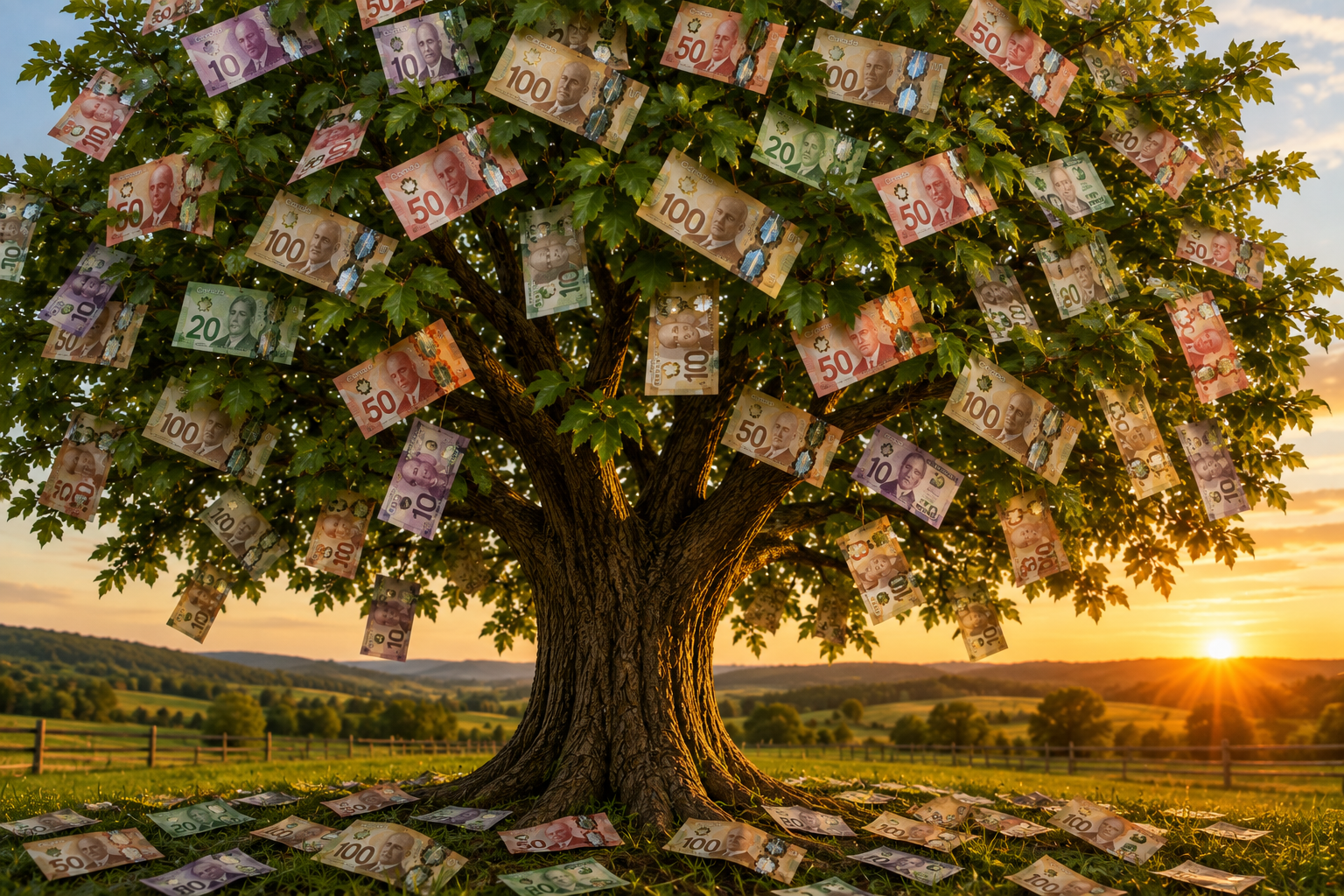
The Unfiltered Homestead: When the Budget Says No

The Point of The Unfiltered Homestead Series

I’m starting this series because I think there is value in showing the whole picture.

      • Not just what works.
      • Not just what looks good.
      • Not just the finished project.

I want to talk about what happens in between.

      • The mistakes.
      • The lessons.
      • The unexpected expenses.
      • The successes.
      • The failures.
      • The moments when I wonder what I was thinking.

And the moments when I look around and realize:

I actually built this.

That’s the part I don’t want to lose.

Because homesteading isn’t about getting everything right.

It’s about learning how to keep going when things don’t go right.

And when everything goes wrong?

      • I take a breath.
      • I figure out what actually needs attention.
      • I deal with that first.
      • Then I move on to the next thing.

That’s my homesteading experience.

And this is the unfiltered version.

When the Budget Says No

There are a lot of decisions on a homestead that come down to one simple question:

Can I afford it?

      • Sometimes the answer is yes.
      • Sometimes I can find a way to make it work.
      • And sometimes, despite how much I want something, how useful it would be, or how much easier it would make my life…

The budget says no.

That’s one of the less glamorous parts of building Blue Gypsy Homestead into a working homestead and business.

It isn’t always about whether something is a good idea.

Sometimes it’s about whether I have the money to make the idea happen right now.

And there is a big difference between those two things.

Welcome back to The Unfiltered Homestead.

This series is about the reality behind the photographs—the mistakes, failed crops, unexpected expenses, exhaustion, business challenges and all the other things that don’t necessarily make for a pretty social media post.

This one is about something I’ve had to become increasingly comfortable with:

Sometimes the answer is no.


I Have Lots of Ideas

That’s probably part of my problem.

      • I have ideas.
      • Lots of them.
      • I see something that could be improved and immediately start thinking about how I could build it.
      • I see a piece of equipment and start thinking about what I could accomplish with it.
      • I see an empty piece of property and start imagining what could be done with it.
      • I think about new products.
      • New crops.
      • New livestock projects.
      • New preservation techniques.
      • New ways of marketing the business.
      • New services I could offer.
      • New ways to make the homestead more productive.

The problem is that ideas are free.

Making them happen isn’t.


The Homestead Has a Very Long Wish List

If money were unlimited, I could probably keep myself busy for years.

      • There are buildings that could be improved.
      • Infrastructure that could be upgraded.
      • Equipment that would make certain jobs easier.
      • Tools that would save time.
      • Storage that would make things more organized.
      • Garden improvements.
      • Animal housing improvements.
      • Processing equipment.
      • Packaging equipment.
      • Marketing materials.
      • And a seemingly endless list of things that would be “nice to have.”

But I’m not operating with an unlimited budget.

I’m operating a 62-acre homestead and trying to build a small business at the same time.

That means every purchase has to compete with every other purchase.

And sometimes something that would be useful simply doesn’t make the cut.


That’s Where “No” Comes In

I’ve learned that there are several different kinds of “no.”

There’s:

No, I don’t need it.

There’s:

No, I can’t afford it.

There’s:

No, I can’t afford it yet.

And there’s:

No, not until the business can pay for it.

Those are very different answers.

The last two are particularly important to me.

Just because I can’t afford something today doesn’t mean I will never be able to afford it.

It may simply mean that I need to work toward it.

That’s actually a much more positive way of looking at a financial limitation.


“Not Yet” Is a Legitimate Answer

I’ve had to get comfortable with this phrase.

Not yet.

      • It doesn’t mean the idea is dead.
      • It means I’m putting it on the list.
      • Maybe I need to generate more revenue first.
      • Maybe I need to reduce another expense.
      • Maybe I need to find a used version.
      • Maybe I need to rent the equipment instead.
      • Maybe I need to figure out whether I can build something myself.
      • Maybe I need to find another way to accomplish the same goal.

Sometimes the solution isn’t having more money.

It’s finding a different solution.


Renting Instead of Buying

Equipment is a perfect example.

There are machines and tools that would be incredibly useful for certain projects.

But if I use something twice a year, buying it doesn’t necessarily make financial sense.

Why own something that’s going to spend most of its life sitting in a shed?

      • It costs money to purchase.
      • It takes up space.
      • It depreciates.
      • It may need maintenance.
      • And when I eventually need it again, there’s a good chance I’ll have forgotten where I put it.

Sometimes renting makes much more sense.

      • I pay for it when I need it.
      • I use it.
      • I return it.
      • Done.
      • If I eventually discover that I’m renting the same equipment often enough that ownership makes financial sense, then I can reconsider.

That’s a much better financial decision than buying something simply because I want it.


Used Equipment Can Change the Equation

I’ve also become much more interested in used equipment.

There is something particularly satisfying about finding a piece of equipment that someone else no longer needs and giving it another life.

Of course, I have to be careful.

Cheap isn’t necessarily inexpensive.

If I buy something for $200 and immediately have to spend $500 repairing it, I haven’t saved money.

But if I can find a solid piece of equipment at a reasonable price, it can make a project possible without blowing the budget.

That’s particularly important when I’m building a business from the ground up.


Sometimes I Have to Build It Myself

I’ve spent more than 35 years working in IT, business analysis, project management and process improvement.

One thing that experience has taught me is that there is usually more than one way to solve a problem.

That applies to physical problems too.

If I can’t afford the perfect solution, I start looking for an acceptable one.

      • Can I build it?
      • Can I modify something I already own?
      • Can I repurpose something?
      • Can I repair what I have?
      • Can I change the process instead of buying something to fix the process?

That last one can be particularly powerful.

Sometimes I don’t need another piece of equipment.

I need a better process.


The Business Has to Pay for Itself

This is probably one of the biggest differences between running a homestead and running a homestead business.

When I’m doing something purely for myself, I can justify an expense because I want it.

Once I’m thinking about the business, the question changes.

What does this purchase do for the business?

      • Does it reduce costs?
      • Does it save time?
      • Does it increase production?
      • Does it improve quality?
      • Does it create a new product?
      • Does it create a new service?
      • Does it generate revenue?

If I can’t answer those questions, I need to think carefully before spending the money.


I Can’t Spend Revenue Twice

This sounds obvious.

It isn’t always obvious when you’re excited about a new idea.

Suppose I make some sales.

There’s a temptation to look at that money and think:

“Great! I can buy that thing I’ve been wanting.”

Except that money may already have a job.

      • It might need to cover inventory.
      • Packaging.
      • Feed.
      • Utilities.
      • Market expenses.
      • Taxes.
      • Repairs.
      • Or the next round of production.

Revenue isn’t automatically available cash.

That’s something I’m becoming much more disciplined about.


Cash Flow Has a Way of Getting My Attention

I’ve talked before about the money problems involved in running a small homestead business.

Cash flow is one of the biggest.

I can have a profitable product and still have a cash-flow problem.

That’s because I have to spend money before I can make money.

      • I need the ingredients.
      • I need the packaging.
      • I need the equipment.
      • I need the time.
      • Then I have to sell the product.

That means I can’t simply look at my sales and decide that I have money available for whatever catches my attention next.

The money has to be allocated.


Sometimes the Budget Says No to a Good Idea

This is probably the hardest part.

      • What if the idea is actually good?
      • What if I know it could work?
      • What if I know there’s a market for it?
      • What if the equipment would make my life easier?

And I still can’t afford it?

That’s frustrating.

But I’ve learned that a good idea at the wrong time is still the wrong investment.

I have to distinguish between:

“This is a bad idea.”

and

“This is a good idea that I can’t afford yet.”

That distinction keeps me from throwing away good ideas simply because the timing isn’t right.


That’s How Some Ideas End Up on the Shelf

I have a mental list of projects I’d like to pursue.

      • Some are realistic right now.
      • Some aren’t.
      • Some require more money.
      • Some require more time.
      • Some require more space.
      • Some require additional research.
      • Some require customers that I haven’t found yet.

That doesn’t mean I’ve abandoned them.

They’re simply waiting.

And there’s nothing wrong with waiting.


I Don’t Need to Do Everything

This is another lesson I’m learning.

There is a temptation, particularly with homesteading, to think that I should be doing everything.

      • Grow all my own food.
      • Raise animals.
      • Preserve everything.
      • Build everything.
      • Make everything.
      • Sell everything.
      • Become completely self-sufficient.
      • Run a successful business.
      • Create content.
      • Maintain the property.
      • And somehow still have time to sit down with a cup of coffee.

That’s not realistic.

At least not for one person.

I’ve had to decide what matters most.


Limited Money Forces Me to Prioritize

There’s actually a benefit to having a limited budget.

It forces me to prioritize.

If I had unlimited money, I could say yes to everything, which in and of itself is not a wise idea.

Because I don’t, I have to ask:

What’s most important?

      • What needs to happen now?
      • What can wait?
      • What will generate the greatest return?
      • What protects what I’ve already invested?
      • What will save me the most time?
      • What will make the biggest difference?

Those questions help me make better decisions.

There is an old joke that I told when I ran the winery and it was adapted to farming:

How do you get $1,000,000 from farming?

Start with $2,000,000.


I Look for Multiple Uses

One of the best ways I’ve found to stretch a dollar is to make sure whatever I buy or build has more than one purpose.

That’s particularly useful on a small homestead.

      • A piece of equipment that can support several products is more valuable than something that performs one very specialized task.
      • A garden crop that can be eaten fresh, canned, frozen, freeze-dried or turned into another product gives me options.
      • An ingredient that can become several different products gives me more flexibility.

The more uses I can get from the same resource, the better.


That’s Part of the Thinking Behind Freeze-Drying

My freeze dryer is a good example.

      • I can use it to preserve food for myself.
      • I can preserve garden surplus.
      • I can experiment with products.
      • I can develop new offerings.

And I’ve also started offering custom freeze-drying services.

That doesn’t mean the machine magically became inexpensive.

It means I’ve tried to make the investment work harder by making use of the machine’s idle time.

Instead of having one expensive piece of equipment perform one job, I’m looking for multiple ways it can contribute to the homestead and business.

That’s how I need to think about larger investments.


The Garden Has to Work Hard Too

I’m starting to look at crops in a similar way.

If I have limited garden space, what gives me the greatest return from that space?

      • A crop that provides one meal is useful.
      • A crop that provides fresh food throughout the season, can be preserved for later and can potentially become an ingredient in something I sell is considerably more interesting.

That’s not to say everything has to become a commercial product.

Some things are grown because I like them.

But when I’m thinking about the business, I have to consider the bigger picture.


Sometimes the Answer Is to Wait for the Money

There is nothing wrong with saving for something.

I think we’ve become accustomed to the idea that if we want something, we should be able to get it immediately.

Credit makes that particularly easy.

But debt doesn’t make an expense disappear.

It simply moves the problem into the future.

For the homestead, I’d rather wait when I can.

      • Save.
      • Research.
      • Compare options.
      • Look for used equipment.
      • Find alternatives.

Then make the purchase when the numbers make sense.

It may take longer.

That’s okay.


I Don’t Want the Homestead Buried in Debt

This is especially important because I’m trying to build something sustainable.

Taking on debt to purchase something that will genuinely increase production and revenue can sometimes make sense.

Taking on debt because I simply want something is another matter.

I don’t want the homestead to become a collection of monthly payments.

The whole point of what I’m building is to create greater independence.

It wouldn’t make much sense to create another kind of dependence in the process.


Frugality Doesn’t Mean Cheap

I’ve had to learn this distinction too.

Being frugal doesn’t mean buying the cheapest thing available.

It means making the money work.

      • Sometimes the cheapest option is exactly the right choice.
      • Sometimes spending more upfront saves money over the long term.
      • Sometimes buying used is smart.
      • Sometimes renting is smart.
      • Sometimes doing nothing is smart.

The goal isn’t to spend as little as possible.

The goal is to spend wisely.


There Are Times When I Really Do Need Something

I also don’t want to pretend that everything can be solved with creativity and duct tape.

      • Sometimes something needs to be replaced.
      • Sometimes equipment is necessary.
      • Sometimes an upgrade genuinely saves enough time or money to justify the cost.
      • Sometimes I need professional help.

Being frugal doesn’t mean refusing to spend money.

It means understanding why I’m spending it.

That’s the difference.


I Have to Think About Opportunity Cost

This is a concept I’ve used throughout my professional career, and it applies surprisingly well here.

If I spend $1,000 on one thing, I can’t spend that same $1,000 somewhere else.

So I have to consider what I’m giving up.

Maybe the equipment I want would be useful.

But perhaps the same money could purchase enough inventory to produce several times the amount of revenue.

      • Maybe repairing something makes more sense than replacing it.
      • Maybe investing in marketing would bring more customers than buying another tool.
      • Maybe paying for a service would save me enough time to make it worthwhile.

Every dollar has an opportunity cost.


My Business Background Helps

My college diploma is in Business Administration/Marketing.

I’ve spent decades working with business systems and analyzing processes.

So I naturally tend to look at these decisions from a business perspective.

      • What is the investment?
      • What is the expected return?
      • What are the risks?
      • What alternatives exist?
      • What happens if the plan doesn’t work?
      • What happens if I don’t do it?

Those aren’t always exciting questions.

But they are useful questions.


AI Has Become Another Tool

This is another area where technology can help.

      • I can use AI as a sounding board when I’m considering an idea.
      • I can describe what I’m trying to accomplish and ask it to identify alternatives.
      • I can ask what costs I may have overlooked.
      • I can ask it to help me compare approaches.
      • I can ask for a project breakdown.
      • I can ask it to help organize my thoughts.

But I don’t blindly accept the answer.

AI can be remarkably useful.

It can also be remarkably wrong.

So anything involving money, safety, regulations, technical specifications or business decisions needs to be checked.

AI is another tool in the toolbox.

It isn’t the person signing the cheque.

That remains me.


Sometimes “No” Leads to a Better Idea

This is probably my favourite part.

I’ve had situations where I wanted to do something one way but couldn’t afford the solution.

So I had to find another way.

And sometimes the alternative turned out to be better.

      • Maybe it was simpler.
      • Maybe it used something I already owned.
      • Maybe it created another revenue opportunity.
      • Maybe it took longer but gave me a better understanding of the process.

A financial limitation can force creativity / innovation.

And sometimes that produces better solutions than money would have.


The Homestead Doesn’t Have to Be Finished

This is another thing I remind myself of.

There is no finish line.

I’m not going to wake up one morning and discover that Blue Gypsy Homestead is finally “done.”

      • There will always be something to improve.
      • Something to repair.
      • Something to build.
      • Something to learn.
      • Something to try.

That’s part of the appeal.

So if something has to wait because the budget says no, that’s okay.

It doesn’t have to happen today.


I’m Building This One Piece at a Time

That’s really what Blue Gypsy Homestead has become.

      • One project.
      • One crop.
      • One rabbit.
      • One product.
      • One improvement.
      • One customer.
      • One lesson.
      • One mistake.
      • One dollar at a time.

I’m not starting with unlimited resources.

I’m starting with what I have.

Then I’m trying to make that resource work as hard as possible.

That’s not always easy.

But it is realistic.


The Unfiltered Truth

There are days when I see something I would love to buy and immediately know I can’t justify the expense.

      • Sometimes that’s frustrating.
      • Sometimes I have to put an idea aside.
      • Sometimes I have to wait.
      • Sometimes I have to find a cheaper alternative.
      • Sometimes I have to rent.
      • Sometimes I have to build it myself.
      • And sometimes I have to simply say: No. Not right now.

I’ve learned that isn’t failure.

It’s financial discipline.

The idea can stay on the list.

The opportunity can stay on the horizon.

And if I build the business properly, maybe one day the budget will say yes.

Until then, I have plenty of other things to do.


When the Budget Says No

I’ve started to see “no” differently.

It’s not necessarily a dead end.

      • Sometimes it’s a pause.
      • Sometimes it’s a challenge.
      • Sometimes it’s an invitation to find another solution.
      • And sometimes it’s the answer that protects me from making a mistake.

Because having something doesn’t automatically make the homestead better.

Buying another piece of equipment doesn’t automatically make the business more profitable.

Starting another project doesn’t automatically move me forward.

Sometimes progress means not spending the money.

That’s a lesson I didn’t necessarily expect when I started this journey.

But it’s one I’m learning to appreciate.


The Homestead I Want to Build

I don’t want Blue Gypsy Homestead to look successful from the outside while quietly drowning financially behind the scenes.

      • I want it to actually work.
      • I want the products to make sense.
      • I want the expenses to make sense.
      • I want the equipment to earn its keep.
      • I want the land to be productive.
      • I want the business to grow at a pace I can support.
      • And I want to be able to look at what I’ve built and know that it isn’t dependent on spending money I don’t have.

That may not be the fastest way to build a business.

But I think it gives me a better chance of building one that lasts.


Sometimes the Most Important Purchase Is the One I Don’t Make

That’s probably the biggest lesson I’ve taken away from all of this.

A purchase can feel like progress.

Sometimes it is.

Sometimes it’s just spending.

There is a difference.

When the budget says no, I have to listen.

Not because I have given up on the idea.

Because I’m trying to protect the bigger idea.

Blue Gypsy Homestead.

      • The farm.
      • The business.
      • The future.
      • And the life I’m trying to build here.

So, for now, some things are going to remain on the wish list.

And that’s okay.

There will be another season.

      • Another opportunity.
      • Another product.
      • Another customer.
      • Another dollar.

And eventually, perhaps, the budget will say:

“Yes.”

Until then, I’ll keep working with what I’ve got.

That’s what homesteading is teaching me.

Do more with less.

And when less really isn’t enough?

Find another way.


🌱 Follow the Blue Gypsy Homestead Journey

I share what I’m learning about homesteading, business, food preservation, technology, AI, photography, gardening, livestock and the ongoing process of turning Blue Gypsy Homestead into a working one-man business.

Visit, Like, & Share — Blue Gypsy Homestead

▶️ YouTube

Follow my homesteading projects, gardening, rabbit raising, food preservation, freeze-drying, product development and the everyday realities of running a homestead by myself.

Blue Gypsy Homestead on YouTube

🎵 TikTok

Follow me for shorter videos, quick updates, behind-the-scenes projects and the occasional homestead lesson learned along the way.

Blue Gypsy Homestead on TikTok

🌱 Learn More

Learn more about Blue Gypsy Homestead, my projects, business services and the journey I’m documenting along the way.

Blue Gypsy Homestead – Learn More

🛒 Online Store

Browse my freeze-dried foods, seasoning salts, smoked seasonings, pre-mixed spice blends, merchandise and other products from Blue Gypsy Homestead.

Blue Gypsy Homestead Online Store


Blue Gypsy Homestead is a 62-acre farm located approximately 35 minutes south of Ottawa, Ontario, Canada. I operate the property as a one-man homestead and small business focused on practical homesteading, gardening, livestock, food preservation, freeze-drying, seasoning products, value-added food products and rural entrepreneurship. The Unfiltered Homestead: When the Budget Says No explores the financial realities of building a homestead and small business with limited resources. I discuss prioritizing purchases, renting equipment that is only occasionally needed, buying used equipment, repairing and repurposing existing resources, evaluating return on investment, managing cash flow and recognizing when a good idea simply needs to wait. My approach is to build Blue Gypsy Homestead sustainably by making careful financial decisions, finding multiple uses for existing resources and growing the business at a pace that the available cash flow can support.

Ticks… I Really Hate Ticks – BLOG 2026-Jun-24

There are a lot of things I love about living on a farm in Eastern Ontario.

The quiet mornings.

Watching the garden come to life.

The rabbits.

The chickens.

The simple satisfaction of building something with your own hands.

Then there are ticks.

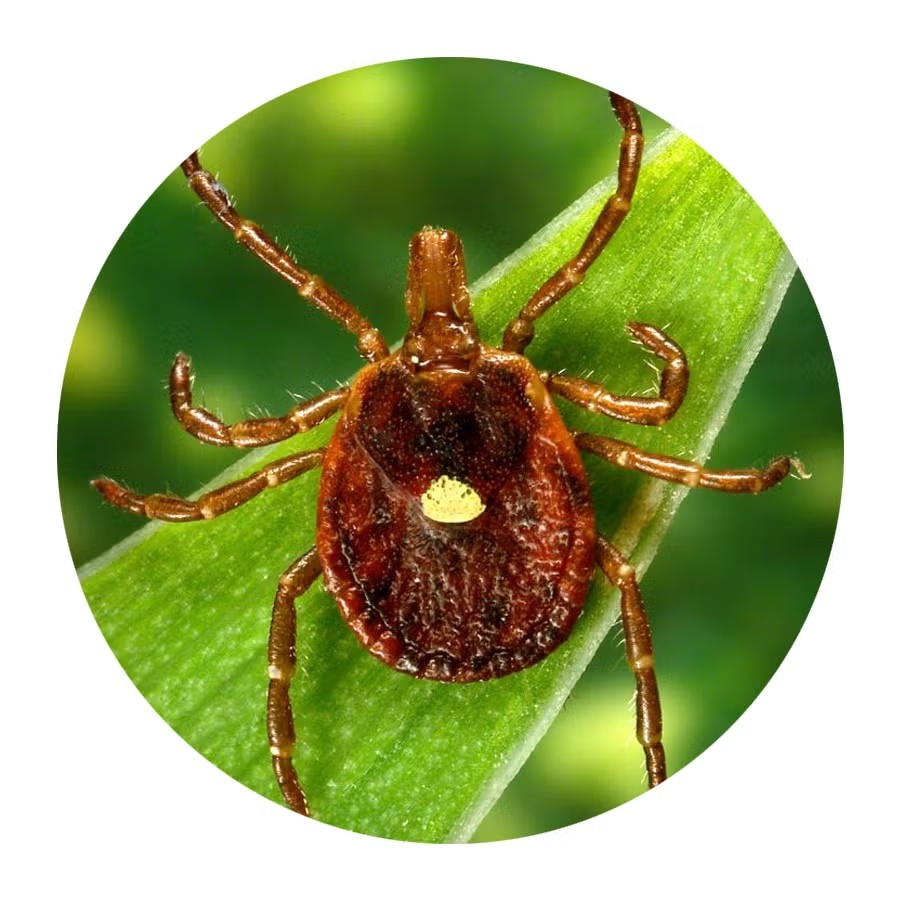
I REALLY hate ticks because, ticks nearly killed me.

Living on a farm in Eastern Ontario, ticks have become an unfortunate fact of life. Once the temperature climbs above about 5°C, they become active, and from that point until late fall, they are simply something you learn to live with.

Unfortunately, my education about ticks didn’t begin here.

It began years ago when I was living in Poughkeepsie, New York.

One year, they nearly killed me.

At first, I just wasn’t feeling well.

Actually, that’s not entirely true.

I was running a fever of around 103°F (39.4°C) for two or three days. Every muscle hurt. I felt absolutely miserable. Like most stubborn men, I was convinced I had caught some particularly nasty flu and that eventually I’d get over it.

My wife had other ideas.

Finally, she looked at me and said, “Enough.”

She drove me to see an old country doctor.

I’m glad she did.

The doctor actually listened.

He asked questions.

He examined me.

He took my temperature.

Then he looked at me and said something I’ll never forget.

“I know what you have.”

Ehrlichiosis.

I’d never even heard of it.

Ehrlichiosis is a bacterial illness caused by Ehrlichia species and transmitted through the bite of infected ticks. Symptoms usually appear between 5 and 14 days after a tick bite and often resemble a severe case of the flu—high fever, chills, muscle aches, headaches, fatigue and generally feeling like you’ve been run over by a truck.

Untreated, it can become extremely serious.

The doctor calmly explained that, in his opinion, I was probably only a few days away from organ failure.

Then, in a manner that only an experienced country doctor could manage, he shrugged and said,

“No big deal.”

He prescribed doxycycline, the antibiotic considered the first-line treatment for ehrlichiosis and Lyme disease, and sent me home.

Within twenty-four hours, I was already feeling dramatically better.

That prescription almost certainly saved my life.

Needless to say…

This is why I HATE ticks.

When I eventually moved back to Canada, I assumed I’d left the tick problem behind.

I couldn’t have been more wrong.

The little buggers had simply decided to migrate north.

Marvelous.

Now they’re firmly established throughout much of Eastern Ontario, and if you spend enough time outdoors, especially around long grass, brush, or woodland, chances are you’ll eventually meet one.

Around here, tick encounters have become almost a daily occurrence.

Sometimes they hitchhike on me.

Sometimes they hitchhike on the Wonder Twins.

Sidebar: If you’re new here, “The Wonder Twins” are my two rescue Miniature Pinschers. They’re roughly ten pounds each and somehow possess the confidence of animals ten times their size. Imagine a Greyhound, Dachshund, and Chihuahua all contributing to the same questionable engineering project.

They’re all attitude.

They have absolutely no idea they’re small.

If given the opportunity, I’m convinced they’d challenge a pack of wolves just to prove a point.

Fortunately, they haven’t had the opportunity.

Back to ticks…

Of all the creatures roaming this planet, I simply cannot understand why ticks were necessary.

Mosquitoes are annoying.

Blackflies are relentless.

Horseflies seem fueled entirely by spite.

But ticks occupy a category all their own.

Since they’re usually found in long grass…

…and this is a farm…

…I have long grass.

Conventional wisdom says you should wear long pants whenever you’re walking through areas where ticks may be present.

That is excellent advice.

I, however, have discovered something that works surprisingly well for me.

I wear shorts.

Now before everyone starts writing angry emails, let me explain.

I have hairy legs.

TMI?

As strange as this sounds, those hairy legs act like an early warning system. I can usually feel a tick crawling long before it reaches somewhere I’d rather it didn’t. Ninety-nine times out of a hundred, I simply pluck it off and drop it into a small pill bottle filled with rubbing alcohol that I carry with me.

The alcohol kills the tick quickly, ensuring it can’t crawl off and find another victim.

Unfortunately, every now and then one manages to sneak past my early warning system.

The worst offenders seem to head for my scalp.

That’s one of the reasons I keep my hair cut very short during the summer months.

It makes tick checks much easier.

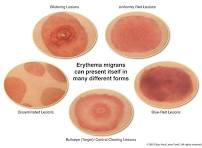
One thing people often associate with tick bites is the famous bull’s-eye rash, known medically as erythema migrans.

It is one of the most recognizable signs of early Lyme disease and usually appears 3 to 30 days after an infected tick bite. In many people, it slowly expands over time and may resemble a target.

The important thing to remember is that not everyone develops the rash.

In fact, some people never see one at all.

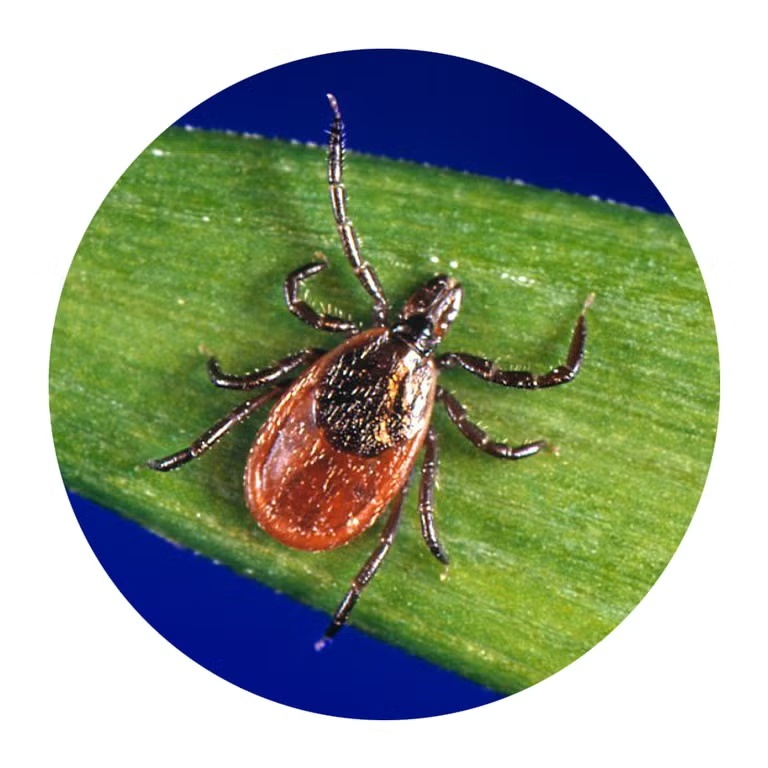
Likewise, many people never notice the tick itself. Young ticks, called nymphs, can be no bigger than a poppy seed.

That’s why it’s important to pay attention not only to your skin but also to how you’re feeling.

If you remove an attached tick, don’t simply forget about it.

Watch for symptoms over the following days and weeks.

Here in Ontario, pharmacists can prescribe a single preventive 200 mg dose of doxycycline in certain high-risk situations after a black-legged tick bite, provided treatment begins within 72 hours of removing the tick and other clinical criteria are met. Not every tick bite requires antibiotics, so if you’re unsure, it’s worth speaking with your pharmacist or healthcare provider.

While Lyme disease gets most of the attention, ticks can carry several other diseases as well.

As my experience demonstrated, Lyme disease isn’t the only thing they have in their microscopic arsenal.

The key is awareness.

Remove ticks promptly using fine-tipped tweezers.

Monitor for symptoms.

Seek medical advice if you’re concerned.

Don’t assume you’re “probably fine” just because you don’t see a rash.

Trust me.

I’ve already tested that theory.

There are plenty of tick repellents on the market, and I absolutely recommend using them when appropriate.

But they’re a bit like the safety on a shotgun.

Use them.

Just don’t trust them completely.

Ultimately, living on a homestead means accepting that nature comes with both beauty and hazards.

The birds.

The gardens.

The wildlife.

The fresh air.

And yes…

The ticks.

I still wouldn’t trade this life for anything.

I just wish it came with fewer passengers looking for a free meal.

Stay safe.

Check yourself.

Check your kids.

Check your pets.

It only takes a few minutes, and those few minutes could make all the difference.

Read more:

👉10 Types of Ticks That Transmit Diseases, Where They Live, and How to Identify Them

Come Follow Along!

I’ve launched a YouTube channel for the homestead.
If you could, please stop in, view the video, select “Like,” subscribe, and share the link. These things will really help the channel get off the ground.

👉 YouTube Channel


Now on TikTok!

Starting this week, I have launched a page on TikTok.
Please drop by if you get a chance.
More content is forthcoming.

👉 TikTok


Ready to Start Your Own Journey?

If you’re thinking about starting your own homestead, check this out:
👉 Learn More 


Shop For Blue Gypsy Homestead Products Online!

If you’d like to see more of what we offer for sale, please stop in at our
👉 Online Store