The Point of The Unfiltered Homestead Series
I’m starting this series because I think there is value in showing the whole picture.
-
-
- Not just what works.
- Not just what looks good.
- Not just the finished project.
-
I want to talk about what happens in between.
-
-
- The mistakes.
- The lessons.
- The unexpected expenses.
- The successes.
- The failures.
- The moments when I wonder what I was thinking.
-
And the moments when I look around and realize:
I actually built this.
That’s the part I don’t want to lose.
Because homesteading isn’t about getting everything right.
It’s about learning how to keep going when things don’t go right.
And when everything goes wrong?
-
-
- I take a breath.
- I figure out what actually needs attention.
- I deal with that first.
- Then I move on to the next thing.
-
That’s my homesteading experience.
And this is the unfiltered version.
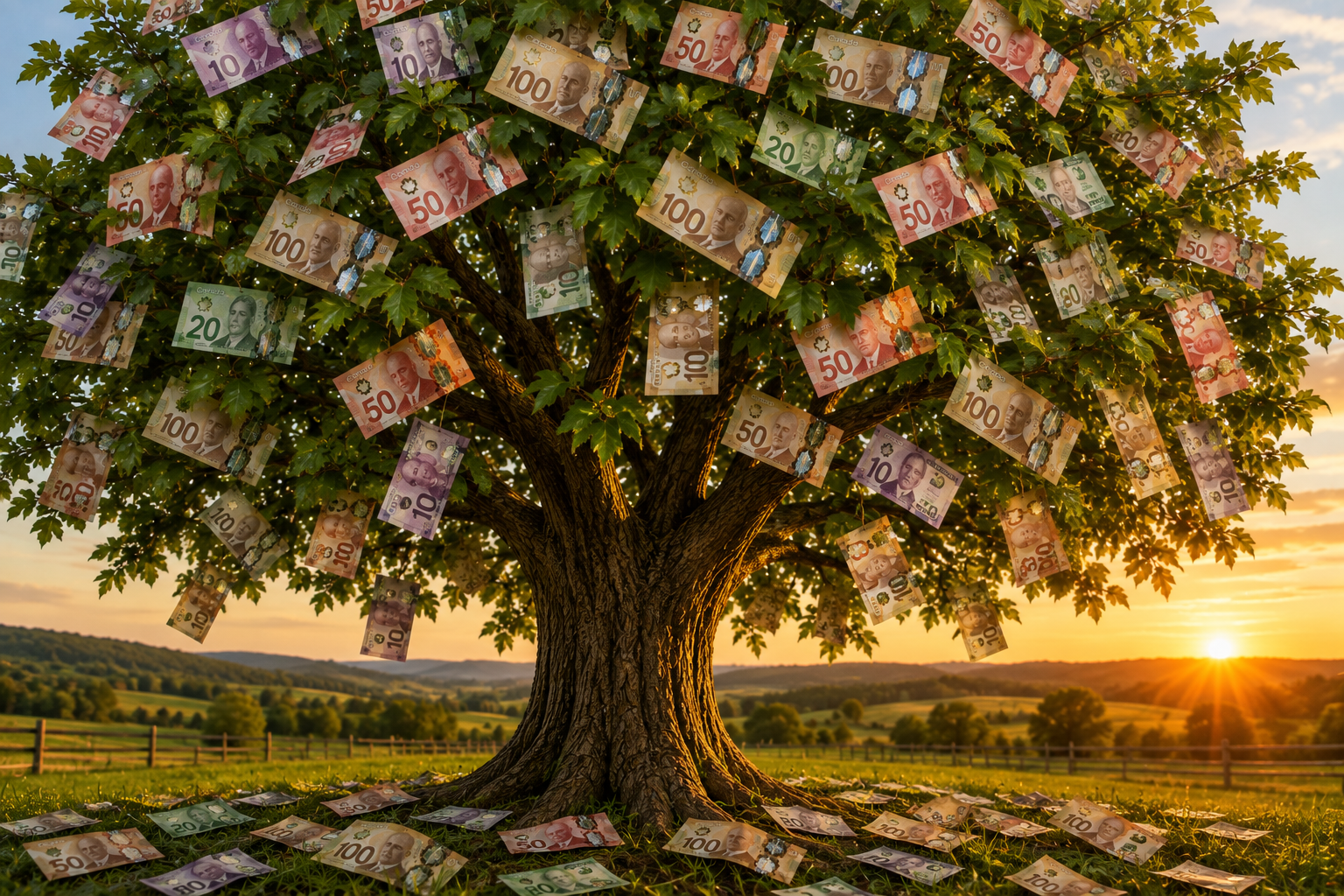
When the Budget Says No
There are a lot of decisions on a homestead that come down to one simple question:
Can I afford it?
-
-
- Sometimes the answer is yes.
- Sometimes I can find a way to make it work.
- And sometimes, despite how much I want something, how useful it would be, or how much easier it would make my life…
-
The budget says no.
That’s one of the less glamorous parts of building Blue Gypsy Homestead into a working homestead and business.
It isn’t always about whether something is a good idea.
Sometimes it’s about whether I have the money to make the idea happen right now.
And there is a big difference between those two things.
Welcome back to The Unfiltered Homestead.
This series is about the reality behind the photographs—the mistakes, failed crops, unexpected expenses, exhaustion, business challenges and all the other things that don’t necessarily make for a pretty social media post.
This one is about something I’ve had to become increasingly comfortable with:
Sometimes the answer is no.
I Have Lots of Ideas
That’s probably part of my problem.
-
-
- I have ideas.
- Lots of them.
- I see something that could be improved and immediately start thinking about how I could build it.
- I see a piece of equipment and start thinking about what I could accomplish with it.
- I see an empty piece of property and start imagining what could be done with it.
- I think about new products.
- New crops.
- New livestock projects.
- New preservation techniques.
- New ways of marketing the business.
- New services I could offer.
- New ways to make the homestead more productive.
-
The problem is that ideas are free.
Making them happen isn’t.
The Homestead Has a Very Long Wish List
If money were unlimited, I could probably keep myself busy for years.
-
-
- There are buildings that could be improved.
- Infrastructure that could be upgraded.
- Equipment that would make certain jobs easier.
- Tools that would save time.
- Storage that would make things more organized.
- Garden improvements.
- Animal housing improvements.
- Processing equipment.
- Packaging equipment.
- Marketing materials.
- And a seemingly endless list of things that would be “nice to have.”
-
But I’m not operating with an unlimited budget.
I’m operating a 62-acre homestead and trying to build a small business at the same time.
That means every purchase has to compete with every other purchase.
And sometimes something that would be useful simply doesn’t make the cut.
That’s Where “No” Comes In
I’ve learned that there are several different kinds of “no.”
There’s:
No, I don’t need it.
There’s:
No, I can’t afford it.
There’s:
No, I can’t afford it yet.
And there’s:
No, not until the business can pay for it.
Those are very different answers.
The last two are particularly important to me.
Just because I can’t afford something today doesn’t mean I will never be able to afford it.
It may simply mean that I need to work toward it.
That’s actually a much more positive way of looking at a financial limitation.
“Not Yet” Is a Legitimate Answer
I’ve had to get comfortable with this phrase.
Not yet.
-
-
- It doesn’t mean the idea is dead.
- It means I’m putting it on the list.
- Maybe I need to generate more revenue first.
- Maybe I need to reduce another expense.
- Maybe I need to find a used version.
- Maybe I need to rent the equipment instead.
- Maybe I need to figure out whether I can build something myself.
- Maybe I need to find another way to accomplish the same goal.
-
Sometimes the solution isn’t having more money.
It’s finding a different solution.
Renting Instead of Buying
Equipment is a perfect example.
There are machines and tools that would be incredibly useful for certain projects.
But if I use something twice a year, buying it doesn’t necessarily make financial sense.
Why own something that’s going to spend most of its life sitting in a shed?
-
-
- It costs money to purchase.
- It takes up space.
- It depreciates.
- It may need maintenance.
- And when I eventually need it again, there’s a good chance I’ll have forgotten where I put it.
-
Sometimes renting makes much more sense.
-
-
- I pay for it when I need it.
- I use it.
- I return it.
- Done.
- If I eventually discover that I’m renting the same equipment often enough that ownership makes financial sense, then I can reconsider.
-
That’s a much better financial decision than buying something simply because I want it.
Used Equipment Can Change the Equation
I’ve also become much more interested in used equipment.
There is something particularly satisfying about finding a piece of equipment that someone else no longer needs and giving it another life.
Of course, I have to be careful.
Cheap isn’t necessarily inexpensive.
If I buy something for $200 and immediately have to spend $500 repairing it, I haven’t saved money.
But if I can find a solid piece of equipment at a reasonable price, it can make a project possible without blowing the budget.
That’s particularly important when I’m building a business from the ground up.
Sometimes I Have to Build It Myself
I’ve spent more than 35 years working in IT, business analysis, project management and process improvement.
One thing that experience has taught me is that there is usually more than one way to solve a problem.
That applies to physical problems too.
If I can’t afford the perfect solution, I start looking for an acceptable one.
-
-
- Can I build it?
- Can I modify something I already own?
- Can I repurpose something?
- Can I repair what I have?
- Can I change the process instead of buying something to fix the process?
-
That last one can be particularly powerful.
Sometimes I don’t need another piece of equipment.
I need a better process.
The Business Has to Pay for Itself
This is probably one of the biggest differences between running a homestead and running a homestead business.
When I’m doing something purely for myself, I can justify an expense because I want it.
Once I’m thinking about the business, the question changes.
What does this purchase do for the business?
-
-
- Does it reduce costs?
- Does it save time?
- Does it increase production?
- Does it improve quality?
- Does it create a new product?
- Does it create a new service?
- Does it generate revenue?
-
If I can’t answer those questions, I need to think carefully before spending the money.
I Can’t Spend Revenue Twice
This sounds obvious.
It isn’t always obvious when you’re excited about a new idea.
Suppose I make some sales.
There’s a temptation to look at that money and think:
“Great! I can buy that thing I’ve been wanting.”
Except that money may already have a job.
-
-
- It might need to cover inventory.
- Packaging.
- Feed.
- Utilities.
- Market expenses.
- Taxes.
- Repairs.
- Or the next round of production.
-
Revenue isn’t automatically available cash.
That’s something I’m becoming much more disciplined about.
Cash Flow Has a Way of Getting My Attention
I’ve talked before about the money problems involved in running a small homestead business.
Cash flow is one of the biggest.
I can have a profitable product and still have a cash-flow problem.
That’s because I have to spend money before I can make money.
-
-
- I need the ingredients.
- I need the packaging.
- I need the equipment.
- I need the time.
- Then I have to sell the product.
-
That means I can’t simply look at my sales and decide that I have money available for whatever catches my attention next.
The money has to be allocated.
Sometimes the Budget Says No to a Good Idea
This is probably the hardest part.
-
-
- What if the idea is actually good?
- What if I know it could work?
- What if I know there’s a market for it?
- What if the equipment would make my life easier?
-
And I still can’t afford it?
That’s frustrating.
But I’ve learned that a good idea at the wrong time is still the wrong investment.
I have to distinguish between:
“This is a bad idea.”
and
“This is a good idea that I can’t afford yet.”
That distinction keeps me from throwing away good ideas simply because the timing isn’t right.
That’s How Some Ideas End Up on the Shelf
I have a mental list of projects I’d like to pursue.
-
-
- Some are realistic right now.
- Some aren’t.
- Some require more money.
- Some require more time.
- Some require more space.
- Some require additional research.
- Some require customers that I haven’t found yet.
-
That doesn’t mean I’ve abandoned them.
They’re simply waiting.
And there’s nothing wrong with waiting.
I Don’t Need to Do Everything
This is another lesson I’m learning.
There is a temptation, particularly with homesteading, to think that I should be doing everything.
-
-
- Grow all my own food.
- Raise animals.
- Preserve everything.
- Build everything.
- Make everything.
- Sell everything.
- Become completely self-sufficient.
- Run a successful business.
- Create content.
- Maintain the property.
- And somehow still have time to sit down with a cup of coffee.
-
That’s not realistic.
At least not for one person.
I’ve had to decide what matters most.
Limited Money Forces Me to Prioritize
There’s actually a benefit to having a limited budget.
It forces me to prioritize.
If I had unlimited money, I could say yes to everything, which in and of itself is not a wise idea.
Because I don’t, I have to ask:
What’s most important?
-
-
- What needs to happen now?
- What can wait?
- What will generate the greatest return?
- What protects what I’ve already invested?
- What will save me the most time?
- What will make the biggest difference?
-
Those questions help me make better decisions.
There is an old joke that I told when I ran the winery and it was adapted to farming:
How do you get $1,000,000 from farming?
Start with $2,000,000.
I Look for Multiple Uses
One of the best ways I’ve found to stretch a dollar is to make sure whatever I buy or build has more than one purpose.
That’s particularly useful on a small homestead.
-
-
- A piece of equipment that can support several products is more valuable than something that performs one very specialized task.
- A garden crop that can be eaten fresh, canned, frozen, freeze-dried or turned into another product gives me options.
- An ingredient that can become several different products gives me more flexibility.
-
The more uses I can get from the same resource, the better.
That’s Part of the Thinking Behind Freeze-Drying
My freeze dryer is a good example.
-
-
- I can use it to preserve food for myself.
- I can preserve garden surplus.
- I can experiment with products.
- I can develop new offerings.
-
And I’ve also started offering custom freeze-drying services.
That doesn’t mean the machine magically became inexpensive.
It means I’ve tried to make the investment work harder by making use of the machine’s idle time.
Instead of having one expensive piece of equipment perform one job, I’m looking for multiple ways it can contribute to the homestead and business.
That’s how I need to think about larger investments.
The Garden Has to Work Hard Too
I’m starting to look at crops in a similar way.
If I have limited garden space, what gives me the greatest return from that space?
-
-
- A crop that provides one meal is useful.
- A crop that provides fresh food throughout the season, can be preserved for later and can potentially become an ingredient in something I sell is considerably more interesting.
-
That’s not to say everything has to become a commercial product.
Some things are grown because I like them.
But when I’m thinking about the business, I have to consider the bigger picture.
Sometimes the Answer Is to Wait for the Money
There is nothing wrong with saving for something.
I think we’ve become accustomed to the idea that if we want something, we should be able to get it immediately.
Credit makes that particularly easy.
But debt doesn’t make an expense disappear.
It simply moves the problem into the future.
For the homestead, I’d rather wait when I can.
-
-
- Save.
- Research.
- Compare options.
- Look for used equipment.
- Find alternatives.
-
Then make the purchase when the numbers make sense.
It may take longer.
That’s okay.
I Don’t Want the Homestead Buried in Debt
This is especially important because I’m trying to build something sustainable.
Taking on debt to purchase something that will genuinely increase production and revenue can sometimes make sense.
Taking on debt because I simply want something is another matter.
I don’t want the homestead to become a collection of monthly payments.
The whole point of what I’m building is to create greater independence.
It wouldn’t make much sense to create another kind of dependence in the process.
Frugality Doesn’t Mean Cheap
I’ve had to learn this distinction too.
Being frugal doesn’t mean buying the cheapest thing available.
It means making the money work.
-
-
- Sometimes the cheapest option is exactly the right choice.
- Sometimes spending more upfront saves money over the long term.
- Sometimes buying used is smart.
- Sometimes renting is smart.
- Sometimes doing nothing is smart.
-
The goal isn’t to spend as little as possible.
The goal is to spend wisely.
There Are Times When I Really Do Need Something
I also don’t want to pretend that everything can be solved with creativity and duct tape.
-
-
- Sometimes something needs to be replaced.
- Sometimes equipment is necessary.
- Sometimes an upgrade genuinely saves enough time or money to justify the cost.
- Sometimes I need professional help.
-
Being frugal doesn’t mean refusing to spend money.
It means understanding why I’m spending it.
That’s the difference.
I Have to Think About Opportunity Cost
This is a concept I’ve used throughout my professional career, and it applies surprisingly well here.
If I spend $1,000 on one thing, I can’t spend that same $1,000 somewhere else.
So I have to consider what I’m giving up.
Maybe the equipment I want would be useful.
But perhaps the same money could purchase enough inventory to produce several times the amount of revenue.
-
-
- Maybe repairing something makes more sense than replacing it.
- Maybe investing in marketing would bring more customers than buying another tool.
- Maybe paying for a service would save me enough time to make it worthwhile.
-
Every dollar has an opportunity cost.
My Business Background Helps
My college diploma is in Business Administration/Marketing.
I’ve spent decades working with business systems and analyzing processes.
So I naturally tend to look at these decisions from a business perspective.
-
-
- What is the investment?
- What is the expected return?
- What are the risks?
- What alternatives exist?
- What happens if the plan doesn’t work?
- What happens if I don’t do it?
-
Those aren’t always exciting questions.
But they are useful questions.
AI Has Become Another Tool
This is another area where technology can help.
-
-
- I can use AI as a sounding board when I’m considering an idea.
- I can describe what I’m trying to accomplish and ask it to identify alternatives.
- I can ask what costs I may have overlooked.
- I can ask it to help me compare approaches.
- I can ask for a project breakdown.
- I can ask it to help organize my thoughts.
-
But I don’t blindly accept the answer.
AI can be remarkably useful.
It can also be remarkably wrong.
So anything involving money, safety, regulations, technical specifications or business decisions needs to be checked.
AI is another tool in the toolbox.
It isn’t the person signing the cheque.
That remains me.
Sometimes “No” Leads to a Better Idea
This is probably my favourite part.
I’ve had situations where I wanted to do something one way but couldn’t afford the solution.
So I had to find another way.
And sometimes the alternative turned out to be better.
-
-
- Maybe it was simpler.
- Maybe it used something I already owned.
- Maybe it created another revenue opportunity.
- Maybe it took longer but gave me a better understanding of the process.
-
A financial limitation can force creativity / innovation.
And sometimes that produces better solutions than money would have.
The Homestead Doesn’t Have to Be Finished
This is another thing I remind myself of.
There is no finish line.
I’m not going to wake up one morning and discover that Blue Gypsy Homestead is finally “done.”
-
-
- There will always be something to improve.
- Something to repair.
- Something to build.
- Something to learn.
- Something to try.
-
That’s part of the appeal.
So if something has to wait because the budget says no, that’s okay.
It doesn’t have to happen today.
I’m Building This One Piece at a Time
That’s really what Blue Gypsy Homestead has become.
-
-
- One project.
- One crop.
- One rabbit.
- One product.
- One improvement.
- One customer.
- One lesson.
- One mistake.
- One dollar at a time.
-
I’m not starting with unlimited resources.
I’m starting with what I have.
Then I’m trying to make that resource work as hard as possible.
That’s not always easy.
But it is realistic.
The Unfiltered Truth
There are days when I see something I would love to buy and immediately know I can’t justify the expense.
-
-
- Sometimes that’s frustrating.
- Sometimes I have to put an idea aside.
- Sometimes I have to wait.
- Sometimes I have to find a cheaper alternative.
- Sometimes I have to rent.
- Sometimes I have to build it myself.
- And sometimes I have to simply say: No. Not right now.
-
I’ve learned that isn’t failure.
It’s financial discipline.
The idea can stay on the list.
The opportunity can stay on the horizon.
And if I build the business properly, maybe one day the budget will say yes.
Until then, I have plenty of other things to do.
When the Budget Says No
I’ve started to see “no” differently.
It’s not necessarily a dead end.
-
-
- Sometimes it’s a pause.
- Sometimes it’s a challenge.
- Sometimes it’s an invitation to find another solution.
- And sometimes it’s the answer that protects me from making a mistake.
-
Because having something doesn’t automatically make the homestead better.
Buying another piece of equipment doesn’t automatically make the business more profitable.
Starting another project doesn’t automatically move me forward.
Sometimes progress means not spending the money.
That’s a lesson I didn’t necessarily expect when I started this journey.
But it’s one I’m learning to appreciate.
The Homestead I Want to Build
I don’t want Blue Gypsy Homestead to look successful from the outside while quietly drowning financially behind the scenes.
-
-
- I want it to actually work.
- I want the products to make sense.
- I want the expenses to make sense.
- I want the equipment to earn its keep.
- I want the land to be productive.
- I want the business to grow at a pace I can support.
- And I want to be able to look at what I’ve built and know that it isn’t dependent on spending money I don’t have.
-
That may not be the fastest way to build a business.
But I think it gives me a better chance of building one that lasts.
Sometimes the Most Important Purchase Is the One I Don’t Make
That’s probably the biggest lesson I’ve taken away from all of this.
A purchase can feel like progress.
Sometimes it is.
Sometimes it’s just spending.
There is a difference.
When the budget says no, I have to listen.
Not because I have given up on the idea.
Because I’m trying to protect the bigger idea.
Blue Gypsy Homestead.
-
-
- The farm.
- The business.
- The future.
- And the life I’m trying to build here.
-
So, for now, some things are going to remain on the wish list.
And that’s okay.
There will be another season.
-
-
- Another opportunity.
- Another product.
- Another customer.
- Another dollar.
-
And eventually, perhaps, the budget will say:
“Yes.”
Until then, I’ll keep working with what I’ve got.
That’s what homesteading is teaching me.
Do more with less.
And when less really isn’t enough?
Find another way.
🌱 Follow the Blue Gypsy Homestead Journey
I share what I’m learning about homesteading, business, food preservation, technology, AI, photography, gardening, livestock and the ongoing process of turning Blue Gypsy Homestead into a working one-man business.
▶️ YouTube
Follow my homesteading projects, gardening, rabbit raising, food preservation, freeze-drying, product development and the everyday realities of running a homestead by myself.
Blue Gypsy Homestead on YouTube
🎵 TikTok
Follow me for shorter videos, quick updates, behind-the-scenes projects and the occasional homestead lesson learned along the way.
Blue Gypsy Homestead on TikTok
🌱 Learn More
Learn more about Blue Gypsy Homestead, my projects, business services and the journey I’m documenting along the way.
Blue Gypsy Homestead – Learn More
🛒 Online Store
Browse my freeze-dried foods, seasoning salts, smoked seasonings, pre-mixed spice blends, merchandise and other products from Blue Gypsy Homestead.
Blue Gypsy Homestead Online Store
Blue Gypsy Homestead is a 62-acre farm located approximately 35 minutes south of Ottawa, Ontario, Canada. I operate the property as a one-man homestead and small business focused on practical homesteading, gardening, livestock, food preservation, freeze-drying, seasoning products, value-added food products and rural entrepreneurship. The Unfiltered Homestead: When the Budget Says No explores the financial realities of building a homestead and small business with limited resources. I discuss prioritizing purchases, renting equipment that is only occasionally needed, buying used equipment, repairing and repurposing existing resources, evaluating return on investment, managing cash flow and recognizing when a good idea simply needs to wait. My approach is to build Blue Gypsy Homestead sustainably by making careful financial decisions, finding multiple uses for existing resources and growing the business at a pace that the available cash flow can support.
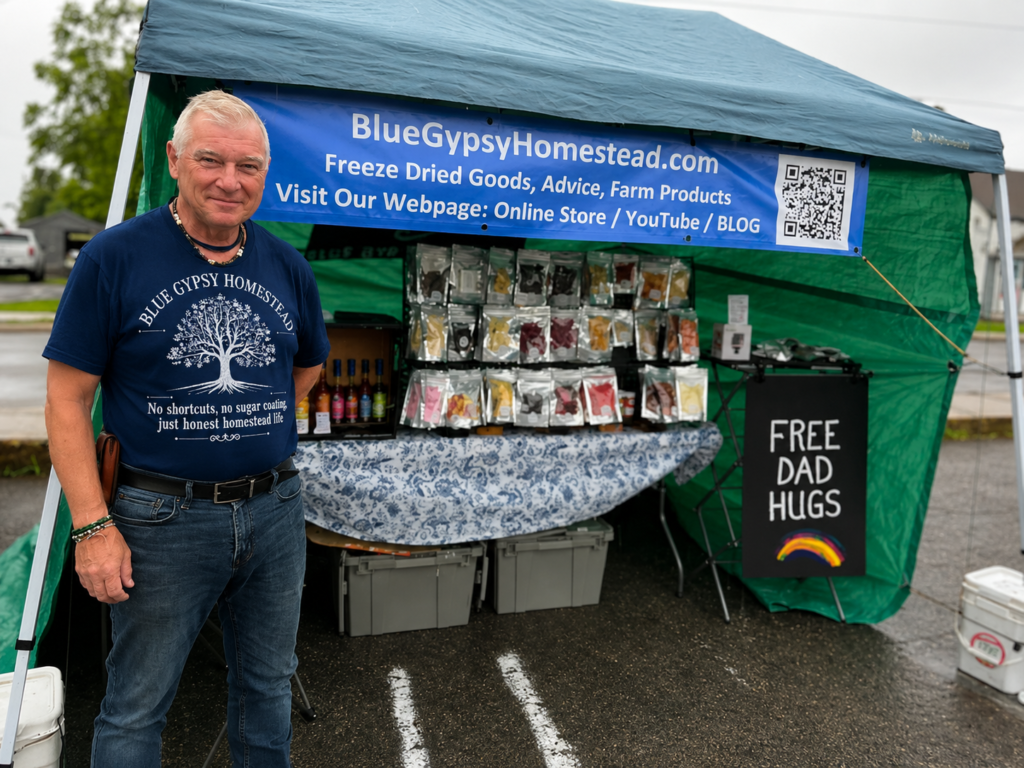

 Sometimes the product isn’t just a shirt.