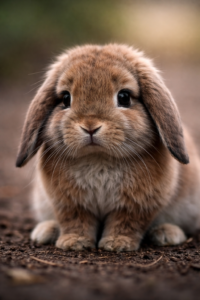
What Raising Meat Rabbits Has Actually Taught Me
In my life as an IT Pro, one of the things I found most important when wrapping a project was the ‘Lessons Learned” aspect. This process was sometimes called “Postmortem”, but that term never sat well with me because it made me feel like we failed, even when the project was successful. Also, Lessons Learned were always meant to be the first step in the next stage of a project, implying that improvement was a part of the cycle.
So, this is my ‘Lessons Learned” post.
When I first decided to raise rabbits for meat, I thought I knew what I was getting into.
Rabbits seemed practical.
They don’t require a huge amount of space. They reproduce quickly. They don’t require the infrastructure that larger livestock needs. They can turn relatively small amounts of feed into a useful source of protein.
On paper, it made a lot of sense.
Reality, as it usually does on a homestead, turned out to be considerably more complicated.
Raising meat rabbits has taught me things about animals, food, money, responsibility and myself that I wasn’t expecting.
Some lessons have been good.
Some have been frustrating.
And some have involved chasing rabbits around the yard because somebody (namely, ME) left a door open.
But that’s homesteading.
You learn.
You adapt.
And occasionally (often???) you stand in the middle of the yard wondering how the hell you got yourself into this.
Rabbits Made Sense for Our Homestead
One of the reasons we chose rabbits was simple: they fit the scale of what we’re trying to accomplish.
We’re not running a commercial livestock operation.
We’re trying to build a productive homestead while making the best use of the land, the resources and the money available to us.
-
-
- Rabbits checked a lot of boxes.
- They don’t need acres of pasture.
- They can be raised in relatively compact housing.
- They reproduce quickly.
-
And unlike some livestock, you can start with a relatively small breeding operation and gradually expand.
That appealed to me.
Starting small is important when you’re building something without an unlimited budget.
The Rabbits Don’t Care About Your Business Plan
This might be the first lesson I learned.
-
-
- You can make spreadsheets.
- You can calculate feed costs.
- You can estimate litter sizes.
- You can project how many kits you’ll have available at a certain age.
- You can calculate expected meat yields.
-
And then the rabbits laugh at your spreadsheet.
Animals don’t read business plans.
Things happen.
-
-
- A doe doesn’t get pregnant.
- A litter is smaller than expected.
- A kit doesn’t thrive.
- A predator becomes interested in your housing.
- Something breaks.
- Something escapes.
-
And suddenly your carefully calculated production schedule isn’t worth much.
That’s not necessarily a bad thing.
It just means that livestock teaches you to leave room for reality.
Reproduction Is Not the Same as Production
One of the things that attracted me to rabbits was their ability to reproduce.
And yes, rabbits can reproduce very efficiently.
But having rabbits isn’t the same thing as producing meat.
-
-
- You need healthy breeding stock.
- You need successful pregnancies.
- You need healthy kits.
- You need adequate feed.
- You need proper housing.
- You need to manage breeding.
- You need to deal with losses.
-
And eventually, you have to make decisions about which animals remain part of the breeding program and which don’t.
The numbers only work if all the pieces work together.
That was an important lesson.
Production is a system, not a single number.
Housing Matters More Than I Expected
A rabbit doesn’t need a mansion.
But it does need a safe, clean, secure environment.
And secure is the important word.
I’ve learned that the hard way.
My rabbit area has evolved over time because every improvement has taught us something else that needed attention.
-
-
- Predator protection matters.
- Ventilation matters.
- Ease of cleaning matters.
- Access matters.
- Weather protection matters.
- And perhaps most importantly: doors need to stay closed.
-
There was one memorable incident when a door was left open and suddenly we had rabbits wandering around the property.
Let’s just say that rounding up rabbits is considerably more difficult than putting them where you want them in the first place.
It was funny afterward.
It wasn’t particularly funny while it was happening.
Predators Are Part of the Equation
One of the less pleasant realities of raising animals is that you’re not the only creature interested in them.
We’ve had to think about predators and how to protect our animals from them.
On a rural property, that can include everything from coyotes and wolves to smaller predators that are perfectly capable of finding a weakness in an enclosure.
This has changed how I think about livestock housing.
-
-
- A fence isn’t automatically protection.
- A cage isn’t automatically secure.
- A door isn’t automatically closed.
-
And something that looks impossible for a predator to get through may turn out to be an invitation.
You learn to look at your enclosures differently.
You start asking:
“If I were a predator, how would I get in?”
That’s actually a useful question.
Rabbits Have Made Me More Comfortable With Responsibility
There is a difference between growing tomatoes and raising animals.
If your tomato plant dies, you feel disappointed.
When an animal depends on you and something goes wrong, the feeling is different.
You are responsible for providing food, water, shelter and protection.
The animal doesn’t get to choose whether you remembered something.
It doesn’t get to decide whether you’re tired.
It doesn’t care whether you had a bad day.
It still needs to be fed.
That responsibility can be inconvenient.
It can also be grounding.
You have to show up.
The Emotional Side Is Real
This is something people don’t always talk about when discussing meat animals.
You can raise an animal with the intention of putting food on the table and still care about that animal.
Those two things aren’t mutually exclusive.
In fact, I think caring for the animal makes the responsibility more meaningful.
These aren’t widgets moving through a production line.
They’re living creatures.
That means there are good days and bad days.
There are births.
There are losses.
There are animals that thrive and animals that don’t.
And eventually, if the purpose is meat production, there is a final step.
I’ve found that the best way to deal with that reality is to respect the animal and be honest about why I’m raising it.
I don’t pretend otherwise.
I’m raising meat rabbits because we want to produce some of our own food.
That doesn’t mean I don’t care about them.
It means I take the responsibility seriously.
Feed Costs Change the Math
One of the biggest lessons from raising rabbits has nothing to do with rabbits.
It has to do with economics.
It is very easy to look at an animal and think:
“I’m producing my own meat, so I’m saving money.”
Maybe.
But you need to calculate everything.
-
-
- Feed isn’t free.
- Housing isn’t free.
- Breeding stock isn’t free.
- Water isn’t free.
- Bedding isn’t free.
- Equipment isn’t free.
- Your time isn’t free.
- Losses aren’t free.
-
And then there are all the little expenses that somehow become a significant number when you add them together.
Homesteading can reduce your dependence on the grocery store.
It doesn’t automatically make everything cheaper.
That’s an important distinction.
Rabbits Have Taught Me About Scale
Another lesson has been understanding the difference between enough and too much.
It’s easy to think that more animals automatically means more production.
But more animals also mean:
-
-
- More feed.
- More cleaning.
- More housing.
- More management.
- More breeding decisions.
- More potential problems.
-
The goal isn’t necessarily to have as many rabbits as possible.
The goal is to have the right number of rabbits for our needs and our capacity.
That’s a much more sustainable way of thinking.
The Homestead Is a System
Rabbits don’t exist in isolation.
Their manure can contribute to the garden.
The garden can produce food.
The garden can produce surplus.
That surplus can be preserved.
Food preservation can reduce waste.
The homestead can produce products that can be sold.
Revenue can help pay for feed and infrastructure.
And suddenly, the rabbit isn’t just a rabbit.
It’s part of a larger system.
That’s one of the things I find most interesting about homesteading.
The more you do it, the more interconnected everything becomes.
Rabbits Have Taught Me to Adapt
This might be the biggest lesson.
Things rarely go exactly according to plan.
So you adapt.
A housing design doesn’t work?
Change it.
A breeding approach isn’t producing what you expected?
Reconsider it.
A predator finds a weakness?
Fix it.
A product doesn’t sell?
Figure out why.
A crop fails?
Try something different.
The temptation is to think that successful homesteaders know exactly what they’re doing.
I don’t think that’s true.
I think successful homesteaders are often just better at adjusting when what they’re doing stops working.
There Is No Such Thing as a Perfect Homestead
Social media can make homesteading look beautifully simple.
-
-
- A wooden table.
- A basket of vegetables.
- A few chickens wandering through the yard.
- A rabbit sitting peacefully in the sunshine.
-
What you don’t see is the broken gate, the failed crop, the animal enclosure that needs repairing, the feed bill, the escaped rabbit, the predator that was spotted near the barn and the project that took three times longer than expected.
That’s the real homestead.
And honestly?
I prefer it.
Because it’s real.
Would I Do It Again?
Yes.
Would I do everything the same way?
Absolutely not.
I’ve learned too much for that.
The rabbits have become part of our ongoing experiment in figuring out how to produce more of our own food while building something sustainable.
I never stop learning.
I’m still improving the housing.
I’m still figuring out what works best for our particular property.
And I’m sure the rabbits have a few more lessons waiting for me.
They usually do.
What Raising Meat Rabbits Has Actually Taught Me
If I had to boil everything down, raising rabbits has taught me this:
Don’t confuse a simple animal with a simple system.
Rabbits may be relatively easy livestock to get started with, but doing it well requires planning, observation, work and a willingness to adapt.
-
-
- They’ve taught me that numbers on a spreadsheet don’t always survive contact with reality.
- They’ve taught me that livestock requires commitment.
- They’ve taught me that food production carries responsibility.
- They’ve taught me that mistakes are inevitable.
-
And they’ve reminded me that homesteading isn’t about creating a perfect little farm where everything works exactly as planned.
It’s about building something that works well enough to keep moving forward.
And sometimes, apparently, it’s also about chasing rabbits around the yard.
That’s homesteading.
And I’m okay with that.
🐇 Follow the Blue Gypsy Homestead Journey
Want to see what actually happens behind the scenes?
Follow Blue Gypsy Homestead as we continue learning about rabbits, gardening, food preservation, DIY projects, livestock and the realities of building a working homestead.

▶️ YouTube
Watch our homesteading videos, rabbit projects, food preservation experiments, farm projects and more.
Blue Gypsy Homestead on YouTube
🎵 TikTok
Follow along for quick videos, homestead updates, projects and the occasional rabbit-related disaster.
Blue Gypsy Homestead on TikTok
🌱 Learn More
Visit the Blue Gypsy Homestead website to learn more about our farm, projects, services and homesteading journey.
Blue Gypsy Homestead – Learn More
🛒 Online Store
Browse our freeze-dried foods, seasonings, merchandise and other products made or offered through Blue Gypsy Homestead.
Blue Gypsy Homestead Online Store
Blue Gypsy Homestead is a 62-acre farm located approximately 35 minutes south of Ottawa, Ontario, Canada. The homestead raises rabbits as part of its broader effort to produce food, increase self-sufficiency and develop a practical small-scale farm business. Through its blog and social media channels, Blue Gypsy Homestead shares real-world experiences with rabbit husbandry, breeding, animal housing, predator protection, food production and the challenges of raising livestock on a working homestead. The focus is on honest lessons learned through experience rather than presenting homesteading as a perfect or effortless lifestyle.