The Most Expensive Mistakes I’ve Made on the Homestead
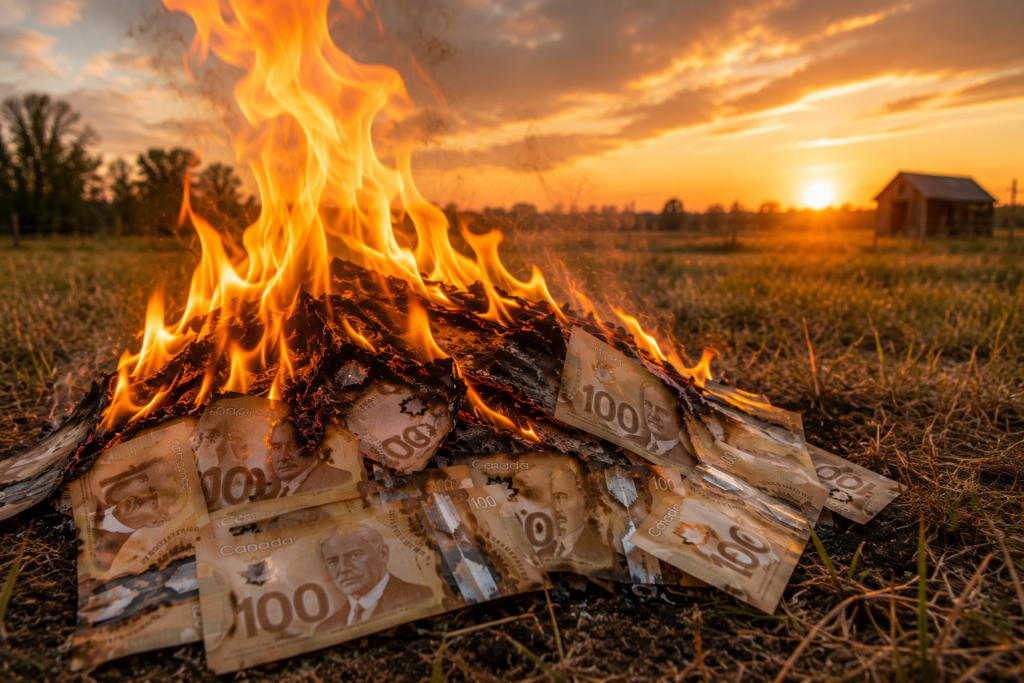
If there’s one thing I’ve learned about homesteading, it’s that mistakes are part of the tuition.
Some lessons cost me very little.
-
-
- I make a bad planting decision, learn from it, and move on.
- I buy the wrong variety of something, and I’m out a few dollars.
- I forget where I put a tool, and eventually find it.
-
Other lessons cost considerably more.
Those are the ones that tend to stick with me.
When I started Blue Gypsy Homestead, I had plenty of experience in business, IT, project management and problem-solving. What I didn’t have was decades of experience managing a 62-acre homestead.
Those are two very different things.
I knew how to manage projects.
I didn’t necessarily know how a project would behave when the weather, animals, land, equipment and my budget all decided to participate.
Over time, I’ve made some expensive mistakes.
-
-
- Some involved money.
- Some involved time.
- Some involved both.
-
And I’ve learned that time can be every bit as expensive as money.
So, in the interest of being honest about the reality of homesteading, here are some of the more expensive lessons I’ve learned.
The Most Expensive Mistake: Trying to Do Too Much
This one probably doesn’t have a single receipt attached to it.
It has a lot of receipts attached to it.
When I first started building the homestead, I had a long list of things I wanted to accomplish.
-
-
- Gardens.
- Animals.
- Infrastructure.
- Food preservation.
- Greenhouses.
- Product development.
- Farm improvements.
- A business.
-
And, naturally, I wanted all of it to happen relatively quickly.
That was optimistic.
The problem with trying to do too much at once isn’t just the money.
It’s the attention.
Every new project requires planning, materials, construction, maintenance and eventually more maintenance.
One project creates another.
-
-
- A new animal requires housing.
- The housing requires fencing.
- The fencing requires gates.
- The gates require hardware.
-
And suddenly my original project has spawned four additional projects.
I’ve learned that I don’t need to accomplish everything immediately.
In fact, trying to do everything immediately can make it harder to accomplish anything properly.
Buying Before I Had a Complete Plan
I’ve made purchases because something seemed like a good idea at the time.
That’s an expensive sentence.
Sometimes the equipment genuinely was useful.
Other times, I discovered that I didn’t really need it.
This is particularly easy to do when you’re starting something new.
You see a tool that promises to make your life easier.
You imagine all the things you could do with it.
You buy it.
Then reality arrives.
Maybe I don’t use it often enough.
Maybe there’s another tool I already own that can do most of the same job.
Maybe the project I bought it for changes direction.
Maybe I underestimated the additional equipment I’d need to actually use it.
The lesson I’ve learned is simple:
Before I buy something, I need to understand what problem I’m actually solving.
Not what problem I might solve someday.
The actual problem.
Renting Instead of Owning Everything
Another lesson I’ve learned is that I don’t necessarily need to own every piece of equipment I might use.
There are some tools and machines that I might need once or twice a year. Buying one can seem like a good investment until I look at what it’s actually doing for the other 360 days.
-
-
- It’s sitting there.
- Taking up space.
- Requiring maintenance.
- Depreciating.
-
And, occasionally, reminding me that I spent a lot of money on something I barely use.
For equipment that I only need occasionally, renting can make much more sense. I can use a properly maintained machine when I actually need it, pay for the time I use it, and then return it when the job is finished. I don’t have to find somewhere to store it, maintain it, insure it or worry about its value declining while it sits unused.
Of course, renting isn’t always the better choice. If I use a piece of equipment regularly, buying it may make much more financial sense. But I’ve learned to ask myself a simple question before making a large equipment purchase:
“How many days a year am I actually going to use this?”
If the answer is five or ten days, renting might be the smarter investment.
After all, owning a piece of equipment isn’t the same thing as getting value from it.
Underestimating Infrastructure
Infrastructure is one of those things that isn’t particularly exciting.
Nobody gets very excited about drainage.
Nobody watches a homesteading video because they can’t wait to see someone install another gate hinge.
Yet infrastructure can determine whether everything else works.
-
-
- Fencing.
- Water.
- Electricity.
- Animal housing.
- Storage.
- Access.
- Drainage.
- Shelter.
-
These things aren’t glamorous, but they are foundational.
I’ve learned that cutting corners on infrastructure can become expensive later.
A temporary solution is sometimes perfectly reasonable.
But a temporary solution that becomes permanent without being properly evaluated can eventually cost more than doing it correctly in the first place.
I’ve had to learn the difference.
The “I’ll Fix It Later” Trap
This one has probably cost me more time than money.
I’ll notice something that needs attention.
I think:
I’ll take care of that later.
Sometimes later works.
Sometimes later becomes next week.
Next week becomes next month.
And eventually the little problem has become a much bigger problem.
That’s particularly true outside.
Weather has a wonderful way of turning small problems into larger ones.
-
-
- A small leak becomes water damage.
- A loose board becomes a broken board.
- A minor fence problem becomes an escape route.
- A little bit of maintenance ignored today can become a repair project tomorrow.
-
I’m getting better at dealing with small problems while they’re still small.
It’s not always exciting.
It is usually cheaper.
Learning the Hard Way About Animal Housing
Animals have taught me some expensive lessons.
I can look at an enclosure and think:
“That should be secure.”
The animal may have a completely different opinion.
Rabbits are particularly good at finding opportunities.
Predators are even better at finding weaknesses.
I’ve learned that animal housing has to be designed for the animal I’m actually keeping—not the animal I imagine I’m keeping.
That means considering:
-
-
- Escape
- Predators
- Weather
- Ventilation
- Cleaning
- Feeding
- Water
- Access
- Maintenance
- Future expansion
-
And I need to think about all of those things before I build.
Not afterward.
The Rabbit Palace Lesson
I’ve had more than one reminder that livestock management requires attention to detail.
One of the more memorable incidents involved the rabbit enclosure.
A door was left open.
Suddenly, I had rabbits wandering around the property.
That was not part of the day’s plan.
It turned into a rather entertaining exercise in rabbit retrieval, but it also reinforced something important.
The best enclosure in the world isn’t particularly useful if I forget to close the door.
Sometimes the expensive lesson isn’t about buying better equipment.
It’s about having better procedures.
It’s about paying attention.
Underestimating the Cost of Feed
Livestock don’t care whether the price of feed has gone up.
They still expect breakfast.
And lunch.
And dinner.
And everything else that rabbits apparently consider a reasonable meal schedule.
When planning livestock, it’s easy to focus on the initial cost.
-
-
- How much does the animal cost?
- How much does the housing cost?
- How much will the equipment cost?
- But the ongoing cost is what matters.
- Feed is recurring.
- Bedding is recurring.
- Maintenance is recurring.
-
And those recurring costs add up.
I’ve learned to think about livestock in terms of total cost of ownership, not simply the cost of acquiring the animal.
That’s a business concept I already understood.
I just had to apply it to the farm.
The Garden Has Cost Me Money Too
People sometimes assume that growing your own vegetables is automatically cheaper than buying vegetables.
It can be.
But not necessarily.
I’ve bought:
-
-
- Seeds.
- Soil amendments.
- Containers.
- Tools.
- Irrigation supplies.
- Fencing.
- Trellising materials.
- Greenhouse supplies.
- And probably a few things I’ve forgotten.
-
Then there is the cost of failed crops.
A crop that doesn’t produce isn’t just disappointing.
It represents time and resources that didn’t produce a return.
That’s one reason I’m becoming more analytical about gardening.
I’m paying attention to what grows well here.
I’m paying attention to what doesn’t.
I’m paying attention to how much work each crop requires.
And I’m asking an increasingly important question:
Is this worth growing?
Sometimes the answer is yes because I enjoy growing it.
Sometimes the answer is yes because it produces food.
Sometimes the answer is yes because I can preserve it or turn it into a product.
And sometimes the answer is simply no.
Not Planning for the Harvest
This one can seem like a strange mistake.
Isn’t having too much food a good problem?
Yes.
But it’s still a problem.
If I grow more than I can eat, I need a plan.
-
-
- Canning.
- Freezing.
- Dehydrating.
- Freeze-drying.
- Storage.
- Sharing.
- Selling.
- Otherwise, all that effort eventually becomes waste.
-
I’ve learned that the harvest plan needs to begin before the harvest.
That lesson has influenced the way I’m approaching my food preservation and freeze-drying activities.
I’m not just interested in growing food.
I’m interested in finding ways to extend its useful life.
Spending Too Much Time on the Wrong Things
This may actually be one of my most expensive mistakes.
Money can sometimes be recovered.
Time cannot.
I’ve spent hours working on things that, in retrospect, weren’t particularly important.
I’ve spent too much time trying to make something perfect when “good enough” would have worked.
I’ve spent time researching things that I could have learned faster by simply trying them.
I’ve spent time solving problems that weren’t actually urgent.
That’s why I’m becoming more deliberate about prioritization.
The question isn’t just:
“What needs to be done?”
It’s:
“What needs to be done first?”
There is a big difference.
Trying to Make Everything Perfect
Perfection is expensive.
It costs money.
It costs time.
And sometimes it prevents me from finishing anything.
When I started, I had a tendency to want things done properly from the beginning.
That’s a good instinct in some circumstances.
But on a developing homestead, circumstances change.
What makes sense today may not make sense next year.
-
-
- The animal area may need to change.
- The garden layout may change.
- The products I sell may change.
- The business model may change.
-
I’ve learned to distinguish between:
“This needs to be built properly.”
and
“I want this to look perfect.”
Those aren’t the same thing.
Not Thinking About the Business Side Early Enough
This is an interesting one because I already had a business background.
-
-
- I have a college diploma in Business Administration/Marketing.
- I’ve spent decades working in business and IT.
- I understand budgets.
- I understand processes.
- I understand project management.
-
Yet it took some time to fully apply that mindset to the homestead.
A homestead business needs to know:
-
-
- What does something cost?
- How much time does it take?
- What can I charge?
- What does the customer actually want?
- What is the margin?
- How much inventory do I need?
- What products are worth continuing?
-
Those questions matter.
It’s not enough to make something I like.
If I’m selling it, I need to understand whether it makes business sense.
Ignoring the Cost of My Own Time
This is closely related.
When I make something myself, it’s tempting to only calculate the ingredients.
If I use $5 worth of ingredients and sell the finished product for $10, it might look like I’ve made $5.
Not necessarily.
-
-
- How long did it take?
- What did the packaging cost?
- What did the label cost?
- How much electricity did I use?
- What equipment was involved?
- What was the cost of shipping?
- What was the market fee?
- What about the time spent preparing the product?
-
Once I start adding those things, the economics can look very different.
I’ve learned that my time is an input.
It has value.
If I ignore that, I’m not really calculating profitability.
To account for that, I now add in a $20 an hour fee for the time I spend on things and this provides me a realistic idea of what something costs.
Learning That Cheap Isn’t Always Cheap
I’ve bought inexpensive things because I was trying to save money.
Sometimes that was the right decision.
Sometimes it wasn’t.
A cheap item that needs to be replaced twice isn’t necessarily cheaper than buying a better one once.
I’ve become much more interested in value rather than simply price.
-
-
- What will it cost me over its useful life?
- How much maintenance will it require?
- Will it do the job properly?
- Will I use it regularly?
- Can I repair it?
-
Those questions have become much more important to me.
The Most Expensive Mistake Isn’t Really About Money
When I look back at my mistakes, I can identify specific things that cost money.
But I think the bigger lesson is something else.
I’ve learned that I need to slow down enough to think.
That’s not always easy.
-
-
- There is always something that needs attention.
- There is always another project.
- There is always another idea.
-
And I have plenty of ideas.
But I’ve learned that a good idea isn’t necessarily a good idea right now.
-
-
- Timing matters.
- Resources matter.
- Cash flow matters.
- Available time matters.
-
And sometimes the smartest decision is to put an idea on the shelf until the circumstances are better.
What I Do Differently Now
I’m still learning.
I’m still making mistakes.
I’m still occasionally buying something and later wondering what I was thinking.
That should never stop. I was told that if I was the smartest person in a room, I’m in the wrong room because I’m not learning anything.
But I’m getting better at asking questions before I act.
-
-
- What problem am I actually trying to solve?
- What will this really cost?
- How much time will it take?
- What happens if it doesn’t work?
- Can I accomplish the same thing another way?
- Do I actually need to do this now?
- Will this make the homestead better, or am I simply creating another project?
-
Those questions have saved me money.
They’ve also saved me time.
And sometimes, they’ve saved me from creating another problem for myself.
Mistakes Are Part of the Investment
I wish I could say that I’ve figured everything out.
I haven’t.
I probably never will.
But I’m starting to think that’s okay.
The mistakes are part of the process.
-
-
- Every failed project teaches me something.
- Every unnecessary purchase teaches me something.
- Every crop failure teaches me something.
- Every animal housing problem teaches me something.
- Every product that doesn’t sell teaches me something about the market.
- Every time I make a mistake that I don’t repeat, I’ve gained something from it.
-
That’s probably the best way I can look at the money I’ve lost along the way.
It was expensive education.
Some of those lessons cost more than others.
But if I learn from them, they’re not completely wasted.
The Real Goal
I’m not trying to build a perfect homestead.
I’m trying to build a working homestead.
-
-
- Something that produces food.
- Something that allows me to preserve that food.
- Something that provides opportunities to develop products.
- Something that can generate income.
- Something that makes good use of the land and resources I have.
- Something that I can realistically manage as one person.
-
That’s changed the way I look at almost everything.
-
-
- I don’t need the biggest operation.
- I don’t need the most expensive equipment.
- I don’t need to do everything.
-
I need to do the right things for this homestead.
And sometimes figuring out what those things are requires making a few mistakes first.
Hopefully, sharing some of mine means somebody else can avoid making the same ones.
Because if there’s one thing I’ve learned, it’s this:
The best mistake is the one somebody else already made for you.
🌱 Follow the Blue Gypsy Homestead Journey
I share what I’m learning about homesteading, business, food preservation, technology, AI, photography, gardening, livestock and the ongoing process of turning Blue Gypsy Homestead into a working one-man business.

▶️ YouTube
Follow my homesteading projects, gardening, food preservation, rabbit raising, product development and the everyday realities of running a homestead by myself.
Blue Gypsy Homestead on YouTube
🎵 TikTok
Follow me for shorter videos, quick updates, behind-the-scenes projects and the occasional homestead lesson learned the hard way.
Blue Gypsy Homestead on TikTok
🌱 Learn More
Learn more about Blue Gypsy Homestead, my projects, business services and the journey I’m documenting along the way.
Blue Gypsy Homestead – Learn More
🛒 Online Store
Browse my freeze-dried foods, seasoning salts, smoked seasonings, pre-mixed spice blends, merchandise and other products from Blue Gypsy Homestead.
Blue Gypsy Homestead Online Store
Blue Gypsy Homestead is a 62-acre farm located approximately 35 minutes south of Ottawa, Ontario, Canada. I operate the property as a one-man homestead and small business focused on practical homesteading, gardening, livestock, food preservation, freeze-drying, value-added food products and rural entrepreneurship. In this article, I share some of the most expensive mistakes I’ve made while developing the homestead, including taking on too many projects, purchasing equipment without fully defining the need, underestimating infrastructure and livestock costs, failing to account for the value of my time, and learning to apply my business and marketing background more deliberately to homestead operations. My goal is to share the lessons I’ve learned through experience so that other homesteaders can make more informed decisions about their own land, projects, budgets and businesses.

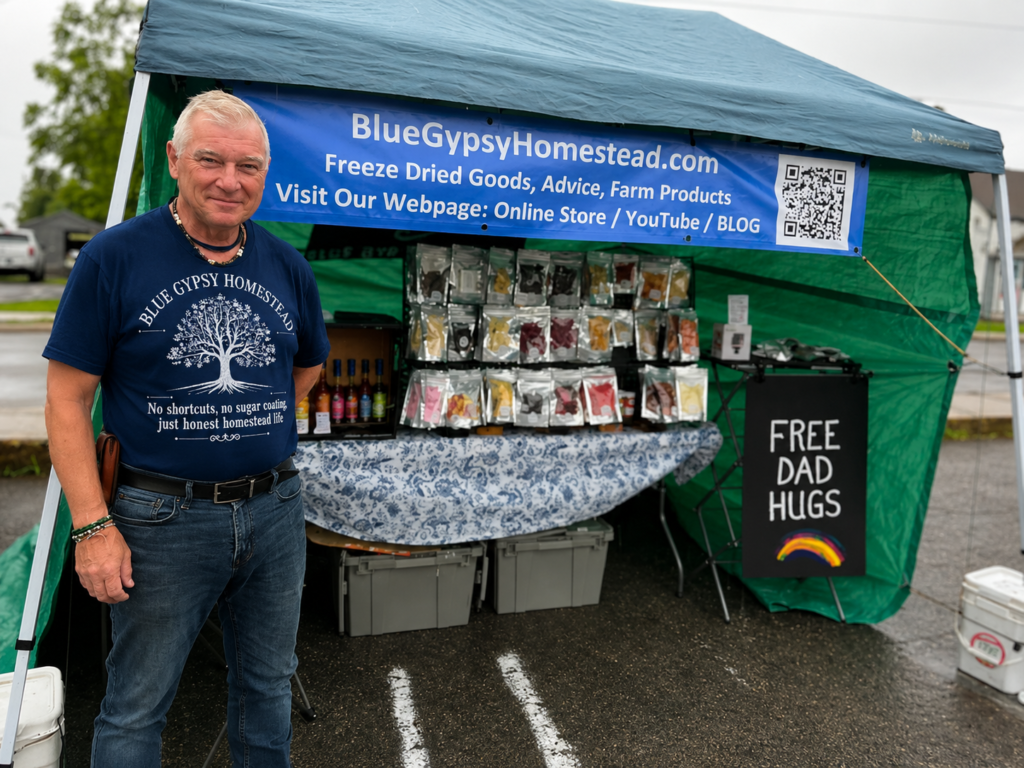


 Sometimes the product isn’t just a shirt.