
The Point of The Unfiltered Homestead
I started this series because I think there is value in showing the whole picture.
-
-
- Not just what works.
- Not just what looks good.
- Not just the finished project.
-
I want to talk about what happens in between.
-
-
- The mistakes.
- The lessons.
- The unexpected expenses.
- The successes.
- The failures.
-
The moments when I wonder what I was thinking.
And the moments when I look around and realize:
I actually built this.
That’s the part I don’t want to lose.
Because homesteading isn’t about getting everything right.
It’s about learning how to keep going when things don’t go right.
And when everything goes wrong?
-
-
- I take a breath.
- I figure out what actually needs attention.
- I deal with that first.
- Then I move on to the next thing.
-
That’s my homesteading experience.
And this is the unfiltered version.
Bonnie Rabbit, Napoleon Bunnypart and the Problem With Naming Livestock
There is a very simple rule I’ve developed when it comes to naming the rabbits at Blue Gypsy Homestead.
I only name the breeders.
That distinction might seem a little strange.
After all, if I’m raising meat rabbits, why name any of them?
Wouldn’t it be easier to keep everything strictly business?
-
-
- Rabbit number one.
- Rabbit number two.
- Female A.
- Male B.
-
Breeding stock.
Production numbers.
No emotional attachment.
Nice and simple.
Except I’ve discovered that naming the breeders actually makes my life easier.
Not because it changes anything about the breeding program.
Because it helps me build a relationship with the animals I’m going to be working with over time.
And that relationship matters.
Meet Napoleon Bunnypart (AKA “Nap”)
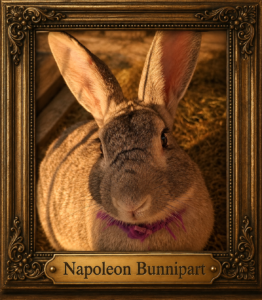
Napoleon is my primary male breeder.
His full name is Napoleon Bunnypart, which remains one of my favourite terrible rabbit puns.
He is also an important part of the breeding operation.
-
-
- That means I’m going to see him regularly.
- I’m going to feed him.
- Check him.
- Maintain his housing.
- Handle him.
- Watch his condition.
- Use him in the breeding program.
- And, ideally, keep him around for quite some time.
-
When I noticed that Napoleon was getting thin, I reasoned that he was not eating properly.
I isolated him and immediately boosted his food. I did this because he mattered. Yes, he has a job, but he is one of the gentlest creatures I know and that makes me care about his wellbeing.
So why wouldn’t I give him a name?
I don’t need to pretend he’s a piece of inventory.
He’s a living animal that I’m deliberately keeping as breeding stock.
Giving him a name makes it easier for me to recognize him as an individual.
And, frankly, Napoleon has enough personality to deserve one.
Bonnie Rabbit (AKA “Bun-Bun” or “Mamma”) Has a Name Too
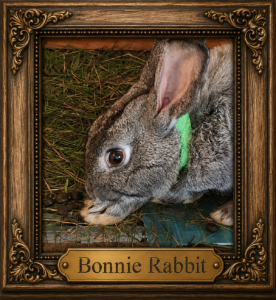
Bonnie is my primary female breeder. One of three, actually.
She’s also named.
Again, there’s a practical reason behind that.
When I walk into the rabbit area, I don’t want to think of the breeders as an anonymous collection of rabbits.
I want to know who I’m looking at.
Bonnie is Bonnie.
Napoleon is Napoleon.
-
-
- They have individual personalities.
- They look different.
- They behave differently.
-
I get to know them.
That’s useful when you’re maintaining breeding animals.
It’s much easier to notice that something is different when you actually know the individual animal you’re looking at.
The Kits Are Different
This is where my naming rule comes in.
I don’t name the kits.
That’s intentional.
The offspring are part of the production side of the operation.
Some may eventually become breeding stock.
Those rabbits can be evaluated as they grow.
If one is selected to become a breeder, that’s when the situation changes.
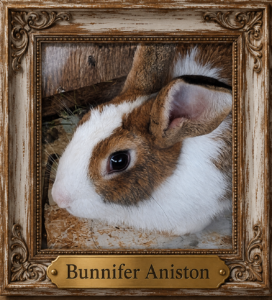
That rabbit moves from the production population into the breeding program. That’s the case with 2 females and 1 male. I looked at the kits, watched them grow, and decided that they would stay in case something happened with Nap and/or Bonnie.
Only then do they get names. Thus, I now have Bunnifer Aniston. Bunoncé, and David Hasslehop.
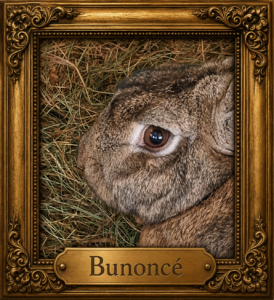
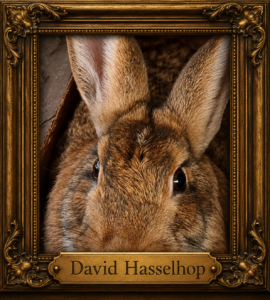
It’s a fairly simple distinction.
Breeders get names. Production rabbits don’t.
That separation makes sense to me.
It Makes the Emotional Question Much Easier
There is an obvious question people could ask:
“But if you’re raising rabbits for meat, how can you give them names?”
For me, the answer is that the animals I’ve named aren’t being raised for meat.
They’re my breeders.
And I have already made a decision about what happens to them at the end of their breeding careers.
They will not become meat.
When Napoleon is no longer producing, Napoleon will retire.
When Bonnie is no longer producing, Bonnie will retire.
They will live out the rest of their lives as pets.
Maybe that will be here.
Maybe it won’t.
But they will have a home somewhere, and they will not enter the meat production side of the operation.
That decision removes much of the contradiction for me.
There Is a Line Between Breeding Stock and Meat Production
That distinction is important to how I think about the rabbits.
I’m perfectly comfortable acknowledging that the rabbit operation has a meat-production purpose.
-
-
- That’s why I’m raising meat rabbits.
- That’s why I have a breeding program.
- That’s why I need productive breeding animals.
-
But the breeders themselves have a different role.
-
-
- They’re the foundation of the program.
- They’re the animals I’m investing time in.
- They’re the ones I need to know.
- They’re the ones I need to monitor.
- And they’re the ones I’ve decided will eventually retire rather than become part of the food supply.
-
That creates a very different relationship.
Naming Helps Me See the Individual
There is something that happens when an animal has a name.
You start seeing the individual rather than the category.
Without a name, I might think:
male rabbit.
With a name, I think:
Napoleon.
That’s a subtle difference, but it matters.
-
-
- I notice his behaviour.
- I recognize him.
- I know where he is.
- I can remember something that happened with him.
- I can compare how he’s doing now with how he was doing previously.
-
That’s not sentimental nonsense.
It’s actually useful when you’re managing breeding stock.
Napoleon Is Not a Spreadsheet Entry
Although, technically, he probably has one.
That’s the contradiction.
From the business side, I need records.
-
-
- Breeding dates.
- Pairings.
- Litters.
- Production.
- Costs.
- Performance.
-
Those things need to be tracked.
Napoleon can appear in those records.
But the spreadsheet isn’t the whole story.
The spreadsheet tells me what happened.
Spending time with Napoleon tells me something about who Napoleon is.
Both have value.
Also, Nap is very good at his job.
And Yes, the Name Makes Me Laugh
That’s part of it.
Why Napoleon Bunnypart?
Because it’s funny.
There are enough serious things happening around a homestead.
-
-
- Bills.
- Repairs.
- Feed.
- Maintenance.
- Production.
- Inventory.
- Markets.
- Equipment.
-
Sometimes naming a rabbit something ridiculous is exactly what I need.
I’m perfectly happy to walk into the rabbit area and announce:
“Good morning, Napoleon.”
I’m also perfectly aware that Napoleon has absolutely no idea who Napoleon Bonaparte was.
He doesn’t care.
He has hay.
He has supplemental pellets and the occasional apple.
That’s probably enough history for him.
Naming Creates a Relationship
This is really the heart of it.
I don’t name the breeders because I’m trying to turn livestock into pets.
I name them because I’m going to have an ongoing relationship with them.
-
-
- They’re going to be around for years.
- They’re going to be part of the homestead’s story.
- They’re going to produce offspring that become part of the operation.
-
I’m responsible for their care.
I’m going to know them.
Why wouldn’t I give them names?
But the Name Doesn’t Change Their Purpose
This is equally important.
Calling him Napoleon doesn’t make him a pet.
-
-
- He’s still a breeder.
- His role in the operation remains exactly the same.
-
The same is true of Bonnie.
-
-
- A name doesn’t change genetics.
- It doesn’t change productivity.
- It doesn’t change the breeding schedule.
- It doesn’t change the cost of feed.
- It doesn’t change the amount of work involved.
- It simply gives me a way of identifying and relating to an individual animal.
-
That’s all.
And sometimes that’s enough.
Then Comes the Question of Retirement
This is where I think the distinction becomes especially important.
Someone might reasonably ask:
“What happens to your breeders when they’re too old to breed?”
My answer is simple: They retire.
-
-
- They’re not going into the freezer.
- They’re not becoming meat.
- They’ve done their job.
- They’ve contributed to the breeding program.
- They’ve produced offspring.
- They’ve earned retirement.
-
Where they spend that retirement is another question.
-
-
- They may remain here if that’s practical.
- They may go to another suitable home.
- They may become somebody’s pet.
-
But their breeding career ends with retirement.
Their lives don’t end with their usefulness.
That Decision Was Important to Me
I didn’t want to create a situation where I developed a relationship with a breeder and then eventually had to decide whether that animal was going to become food.
That isn’t the relationship I wanted with my breeding stock.
I wanted the distinction to be clear from the beginning.
-
-
- These rabbits are breeders.
- These rabbits will eventually retire.
- These rabbits will not become meat.
-
That makes the emotional side considerably easier for me.
It also gives me a clear way to explain the operation to somebody else.
It Doesn’t Mean I Don’t Care About the Other Rabbits
This distinction shouldn’t be misunderstood.
Not naming a rabbit doesn’t mean I don’t care about it.
Every animal I raise still deserves and receivesd appropriate care.
The difference is the role the animal occupies within the operation.
-
-
- A breeder is part of the foundation of the program.
- A meat rabbit is part of the production side.
-
Those roles are different.
Naming is simply one way I’ve chosen to recognize that difference.
The Breeders Are the Characters
And let’s be honest.
This makes the rabbit operation much more fun to write about.
Napoleon has a personality.
Bonnie has a personality.
They become characters in the ongoing Blue Gypsy Homestead story.
When I talk about the rabbit breeding program, I can talk about what Napoleon did.
I can talk about Bonnie.
I don’t have to write:
“The male breeder rabbit was observed behaving in an unusual manner.”
That sounds like a government report.
I’d much rather say:
“Napoleon was being Napoleon again.”
OR
“Bonnie wasn’t in the mood today and that left Nap visibly disappointed.”
That’s considerably more entertaining.
It Also Makes the Homestead More Personal
Blue Gypsy Homestead isn’t a commercial rabbit factory.
It’s a real property.
-
-
- There are real animals here.
- There is one person trying to make all of this work.
- And there are relationships developing along the way.
-
That’s part of what makes this place different.
-
-
- The business side matters.
- The numbers matter.
- The production matters.
- But so do the animals themselves.
-
I don’t think acknowledging that makes the operation less legitimate.
I think it makes the story more honest.
There Is Still a Business Here
I don’t want the emotional side to obscure the practical side.
The rabbit breeding program is still part of the larger Blue Gypsy Homestead business.
-
-
- Feed costs money.
- Housing costs money.
- Infrastructure costs money.
- Time costs money.
- Breeding stock represents an investment.
- Production has to be managed.
-
Those realities don’t disappear because I’ve named the rabbits.
In fact, knowing the individual breeders can help me make better decisions about the breeding program.
-
-
- I’m paying attention to them.
- I’m tracking them.
- I’m watching them.
-
That’s useful.
The Names Create a Boundary
I think this is why the system works for me.
There is a psychological boundary.
On one side are the breeders.
Napoleon.
Bonnie.
Future breeders who will eventually receive names.
They are individuals I’m building a long-term relationship with.
On the other side are the production rabbits.
They’re still cared for.
They’re still important.
But I’m not creating the same long-term personal connection with each individual.
That distinction helps me keep the operation emotionally manageable.
It Also Solves the Awkward Conversation
Someone asks:
“What happens to Napoleon when he’s too old to breed?”
-
-
- I don’t have to dodge the question.
- I don’t have to say:
-
“Well, we’ll see.”
I know the answer: He retires as a pet.
Someone asks: “What about Bonnie?”
Same answer.
She retires.
The breeders I’ve named have a future beyond their productive years.
That was part of the decision to name them in the first place.
There Is Something Nice About That
A breeding animal spends a significant portion of its life being useful to the operation.
But usefulness doesn’t have to be the only measure of its value.
-
-
- Napoleon doesn’t have to produce rabbits forever to remain Napoleon.
- Bonnie doesn’t have to keep producing litters forever to remain Bonnie.
-
Eventually, their jobs will be finished.
That’s okay.
They’ll have done what I needed them to do.
Then they get to enjoy retirement.
And frankly, I suspect Napoleon will be excellent at it.
He’s already quite good at doing very little while looking important.
The Name Stays
That’s another thing I like.
When Napoleon retires, he doesn’t become:
Former Breeder #1.
He’s still Napoleon Bunnypart.
The name belongs to the rabbit, not the job.
The job eventually ends.
The relationship doesn’t have to.
That’s probably the biggest reason I like naming the breeders.
So, Does Naming Livestock Change How I Think About Them?
Yes.
But probably not in the way somebody might expect.
-
-
- It doesn’t make me forget that I’m raising meat rabbits.
- It doesn’t make me incapable of making practical decisions.
- It doesn’t turn the entire rabbit operation into a petting zoo.
-
Instead, naming the breeders gives me a way to recognize them as individuals while maintaining a clear distinction between breeding stock and production animals.
-
-
- I know who Napoleon is.
- I know who Bonnie is.
- I care about them.
- I enjoy their personalities.
- I pay attention to them.
-
And I have already decided that when their breeding careers are over, they will retire as pets.
-
-
- They will not become meat.
- That’s the line I’ve drawn.
-
And I’m comfortable with it.
Napoleon Bunnypart Gets to Grow Old
Eventually, there will come a day when Napoleon isn’t the breeder anymore.
Maybe I’ll notice that he’s getting older.
Maybe the breeding program will move in another direction.
Eventually, one of his offspring will take over his role.
Whatever the reason, eventually his job will end.
When that happens, he’ll retire.
Somewhere.
Hopefully somewhere comfortable, with somebody who appreciates an oversized rabbit with an inflated sense of importance.
Because that’s what he deserves.
Bonnie deserves the same.
They gave me their productive years.
I’ll give them their retirement.
And That’s Why I Name Them
Not because I’m confused about what I’m doing.
Not because I can’t distinguish between livestock and pets.
And certainly not because Napoleon has somehow convinced me that he’s a tiny furry member of the aristocracy.
Although he may disagree with that last point.
I name the breeders because I’m going to know them.
-
-
- I’m going to work with them.
- I’m going to depend on them.
- I’m going to care for them.
- I’m going to watch them contribute to the next generation.
- And eventually, I’m going to retire them.
-
That’s the arrangement.
The meat rabbits are part of the food-production side of the homestead.
The breeders are part of the foundation of that operation.
And the breeders I’ve named will eventually become retired pets.
So yes, naming livestock changes things.
It makes the animals more personal.
It makes the relationship more memorable.
And in the case of Napoleon Bunnypart, it gives me an excuse to make terrible jokes about rabbits.
I’m perfectly comfortable with all three.
Follow the Blue Gypsy Homestead Journey
I share what I’m learning about homesteading, business, food preservation, technology, AI, photography, gardening, livestock and the ongoing process of turning Blue Gypsy Homestead into a working one-man business.

YouTube
Blue Gypsy Homestead on YouTube — follow the ongoing projects, products, lessons and behind-the-scenes work.
https://www.youtube.com/@bluegypsyhomestead/videos
TikTok
Blue Gypsy Homestead on TikTok — follow the ongoing projects, products, lessons and behind-the-scenes work.
https://www.tiktok.com/@bluegypsyhomestead
Learn More
Blue Gypsy Homestead — follow the ongoing projects, products, lessons and behind-the-scenes work.
https://www.bluegypsyhomestead.com/
Online Store
Blue Gypsy Homestead Online Store — follow the ongoing projects, products, lessons and behind-the-scenes work.
https://blue-gypsy-homestead.square.site/
About Blue Gypsy Homestead
Blue Gypsy Homestead is a 62-acre farm located approximately 35 minutes south of Ottawa, Ontario, Canada. What was once a winery is being transformed into a working homestead and one-man business incorporating livestock, gardening, food preservation, freeze-drying, product development, direct-to-consumer sales, farmers’ markets, technology and artificial intelligence.
The goal isn’t to present a polished version of rural life. It’s to document the actual process of building something from the ground up—projects that work, projects that don’t, products that sell, products that don’t, unexpected problems, unexpected successes and everything that happens in between.